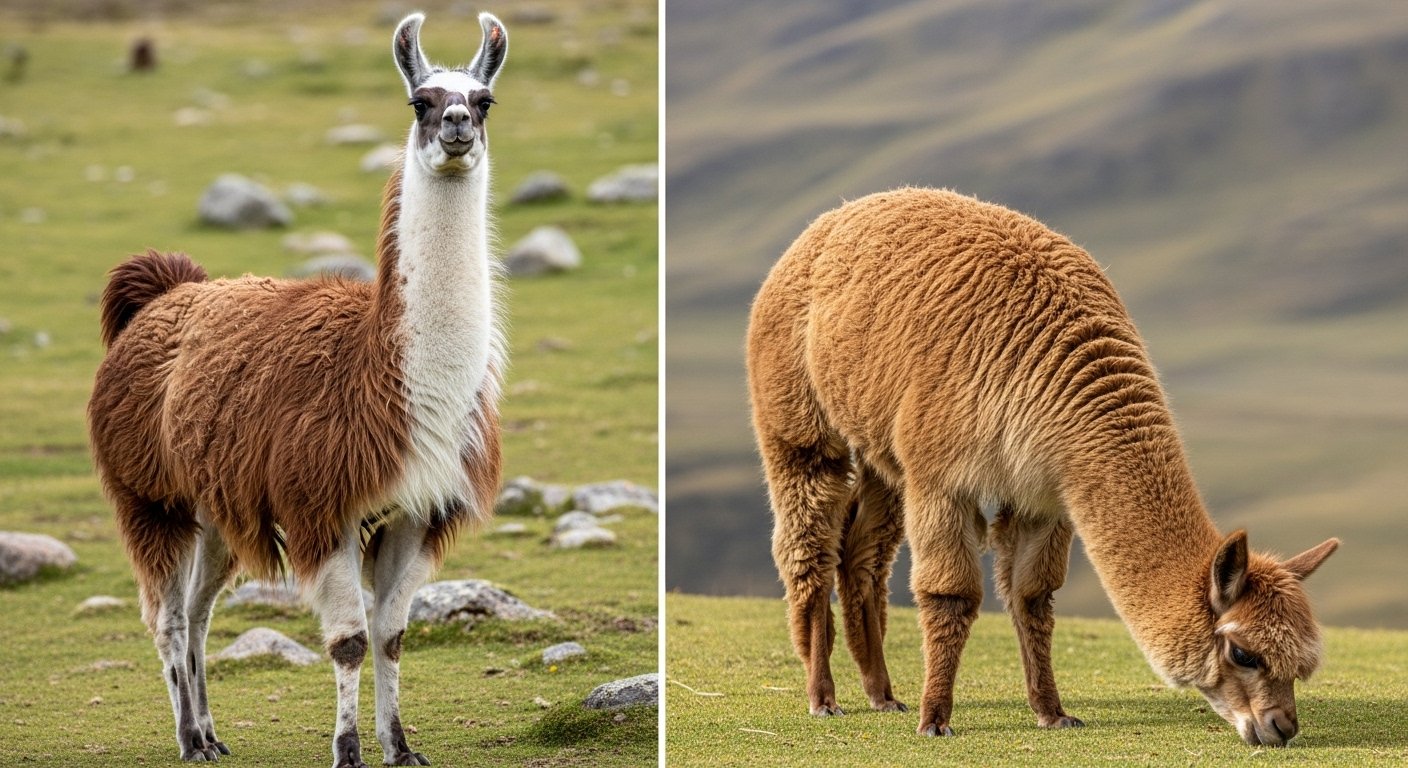
The difference between llama and alpaca often confuses travelers, farmers, and animal lovers who encounter these two graceful camelids in the Andes. At first glance, llamas and alpacas look like twin silhouettes against the high ridges of the mountains, both with long necks, soft fleece, and expressive eyes. But once you look closely, subtle distinctions begin to emerge in size, fiber texture, temperament, and purpose.
Understanding the difference between llama and alpaca is essential whether you are a farmer, a traveler, or a fiber enthusiast. The difference between llama and alpaca becomes especially important when choosing livestock for farming or textile production. Many people confuse them, but the difference between llama and alpaca is clear once you compare their size, ear shape, and coat quality. Learning the difference between llama and alpaca also helps buyers avoid costly mistakes in breeding or fiber investment. By the end of this guide, you will confidently recognize the difference between llama and alpaca in any setting.
Understanding the difference between llama and alpaca is important whether you are:
- A farmer considering livestock
- A fiber enthusiast exploring luxury textiles
- A traveler planning a South American tour
- Or simply curious about llama vs alpaca differences
This complete guide explains everything, from biology to business potential.
What Is a Llama?
The Llama is a large domesticated camelid native to the Andes Mountains.
Ø Key Characteristics:
- Height: 5.5 to 6 feet
- Weight: 280 to 450 pounds
- Lifespan: 15 to 25 years
- Primary Role: Pack animal and livestock guardian
Llamas were bred for strength and endurance. They can carry loads up to 25–30% of their body weight across rugged mountain terrain. Think dependable mountain transport with attitude control.
What Is an Alpaca?
The Alpaca is smaller and primarily bred for its exceptionally soft fiber.
Ø Key Characteristics:
- Height: 4.5 to 5 feet
- Weight: 100 to 200 pounds
- Lifespan: 15 to 20 years
- Primary Role: Fiber production
Alpacas are quieter and more herd-dependent than llamas. Their value lies not in muscle power, but in the fine fleece they produce annually.
Llama vs Alpaca: Quick Comparison Table
| Feature | Llama | Alpaca |
| Size | Larger, heavier | Smaller, compact |
| Ear Shape | Long, banana-shaped | Short, spear-shaped |
| Face | Long, narrow | Short, fluffy |
| Fiber | Coarse | Soft, fine, hypoallergenic |
| Purpose | Pack & guarding | Fiber production |
| Temperament | Independent | Herd-oriented |
| Cost | Lower average price | Higher due to fiber value |
This table improves featured snippet potential and user engagement.
Physical Differences Between Llama and Alpaca
Ø Size and Body Structure
The most obvious difference between llama and alpaca is size. Llamas can weigh more than twice as much as alpacas. Their bodies are longer, legs taller, and frames more muscular.
Alpacas appear rounded and plush, almost toy-like in proportion.
Ø Ear Shape
Ear shape is the fastest identification trick:
- Llamas: Long, curved ears
- Alpacas: Short, straight ears
Ø Face and Coat
Alpacas have shorter snouts and thicker facial fleece. Llamas have more defined facial lines and thinner coats around the face.
Ø Fiber Quality Comparison
Fiber is one of the most important differences between llama and alpaca.
Ø Alpaca Fiber:
- Softer than sheep wool
- Naturally hypoallergenic
- Warmer and lighter than wool
- Comes in 20+ natural shades
There are two alpaca types:
- Huacaya Alpaca – Fluffy, dense fiber
- Suri Alpaca – Long, silky locks
Ø Llama Fiber:
- Coarser texture
- Often used for rugs, ropes, and outerwear
- Less commercially valuable than alpaca fleece
If fiber business is your goal, alpaca clearly wins.
Behavioral Differences
Ø Llamas
- More confident and independent
- Often used as livestock guardians
- Can live alone or in smaller groups
Ø Alpacas
- Prefer herds
- More timid and gentle
- Easily stressed when isolated
Farmers often use llamas to guard sheep or goats from predators.
Learn more differences between…..

Historical and Cultural Importance
Both animals played major roles in the Inca Empire.
Ø Llamas:
- Transported goods
- Essential for trade routes
- Used in ceremonial rituals
Ø Alpacas:
- Reserved for elite clothing
- Fiber used in royal garments
Llamas symbolized endurance. Alpacas symbolized refinement.
Are Llamas and Alpacas Related?
Yes. They belong to the camelid family, alongside:
- Camel
- Guanaco
- Vicuña
Llamas descended from guanacos.
Alpacas descended from vicuñas.
Farming: Cost, Care & ROI Comparison
For agricultural readers, here is a deeper breakdown.
Ø Purchase Cost (Approximate Global Averages)
- Llama: $500 to $2,500
- Alpaca: $3,000 to $10,000 (breeding quality animals cost more)
Feed Requirements
Both eat:
- Grass pasture
- Hay
- Mineral supplements
Average daily feed cost per animal: moderate and comparable to sheep.
Shelter Needs
- Simple three-sided shelter
- Dry bedding
- Proper fencing
Return on Investment
Ø Llama ROI:
- Income from trekking services
- Livestock guarding services
- Occasional fiber sale
Ø Alpaca ROI:
- Annual fleece harvest
- Breeding programs
- High-value textile industry
Alpacas typically provide stronger commercial returns in fiber-focused farming.
Can Llamas and Alpacas Breed?
Yes. Their hybrid offspring is called a “huarizo.” However, hybrids are less common in commercial breeding.
Do Llamas and Alpacas Spit?
Yes, both do. Spitting is usually a dominance behavior between animals rather than aggression toward humans.
Which Is Better: Llama or Alpaca?
It depends on your purpose.
Ø Choose a llama if you:
- Need a pack animal
- Want livestock protection
- Prefer lower initial investment
Ø Choose an alpaca if you:
- Want luxury fiber production
- Plan breeding programs
- Prefer smaller, herd-focused animals
There is no universal winner in the difference between llama and alpaca. Only purpose determines superiority.
FAQ: Difference Between Llama and Alpaca
How can I quickly tell the difference between llama and alpaca?
Check ear shape and size. Llamas are larger with curved ears. Alpacas are smaller with short straight ears.
Is alpaca wool better than llama wool?
Yes, alpaca fiber is softer, warmer, and more commercially valuable.
Are alpacas friendlier than llamas?
Alpacas are generally gentler but more herd-dependent.
Which animal is easier for beginners?
Alpacas are often easier for small farms focused on fiber. Llamas require more handling due to their size.

Hi All! I’m Imran Abbas. I’m a Ph.D (scholar) in Structural Chemistry and I work in a number of domains like Bioinformatics, Literature, politics, sports and I’m a polyglot as well. I respect all irrespective of their ethnicity, locality and color. I’m always ready to learn new ideas and travel to different parts of the world.