What Are Living Things? Definition, Characteristics, Examples
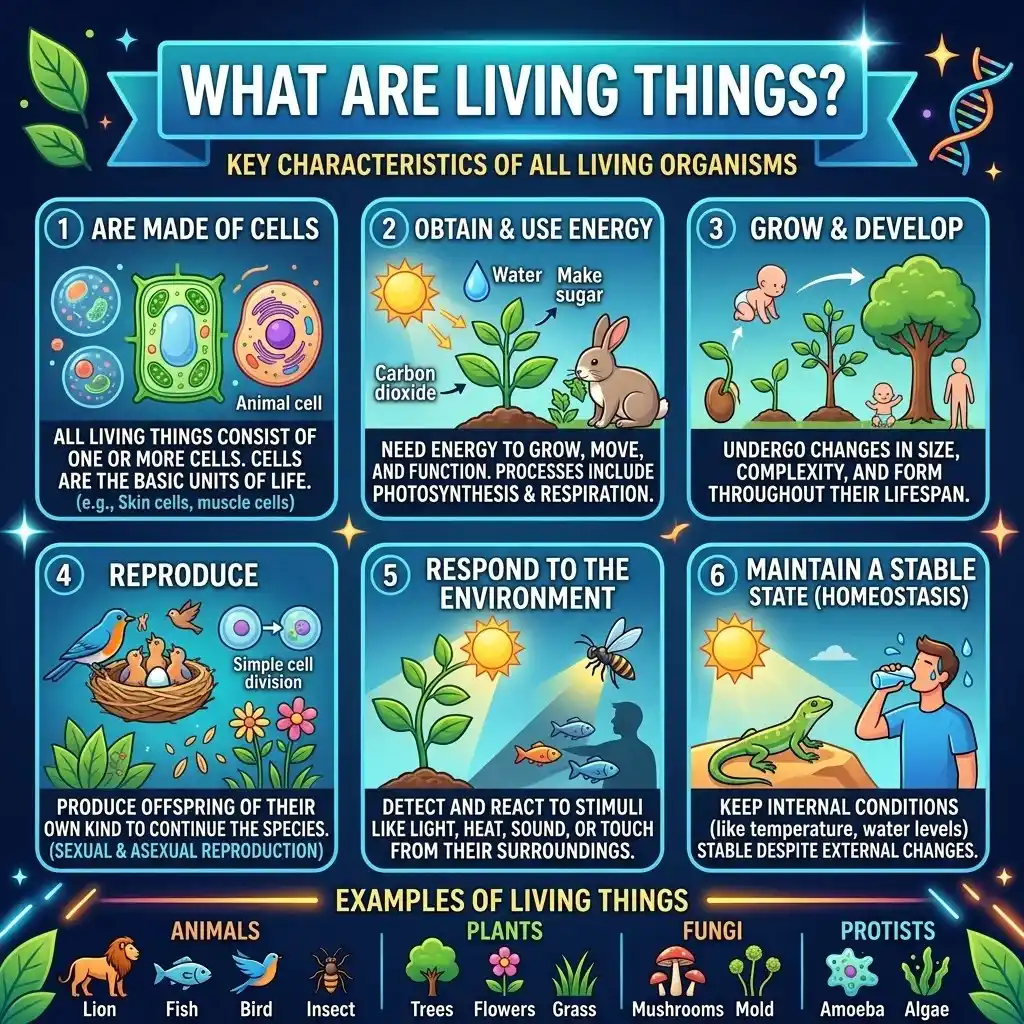
Colorful educational diagram showing examples of living things including humans, animals, plants, and microorganisms with labels explaining characteristics of life.

Living things are all around us. They include humans, animals, plants, and even tiny organisms we cannot see with our eyes. In this guide, you will clearly understand what living things are, how scientists define them, and how they differ from non-living things. Moreover, you will explore examples, diagrams, activities, worksheets, and common mistakes students … Read more
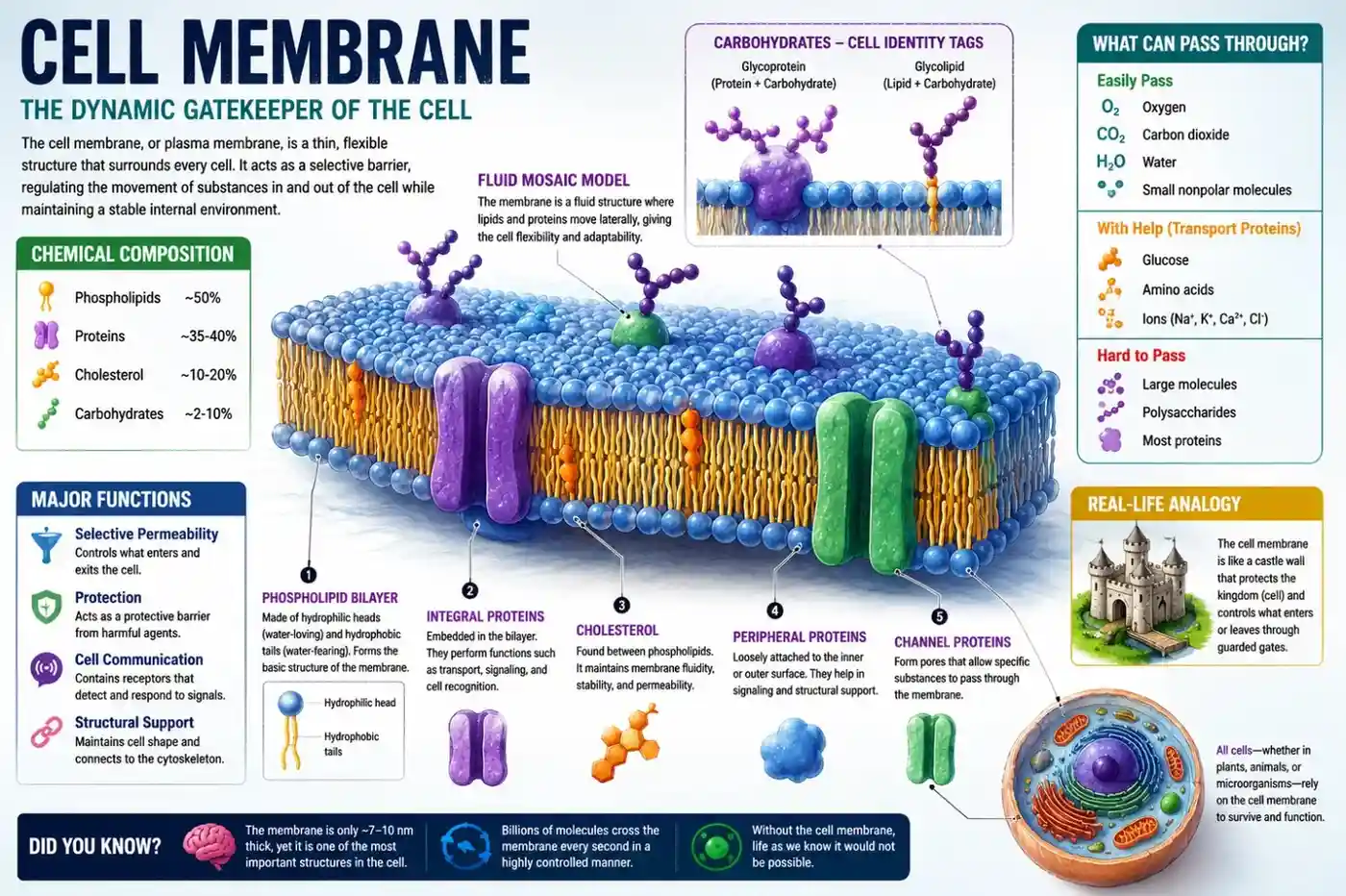
Cell Membrane: Structure, Types, Chemical Composition, and Functions Explained by an Expert

Detailed educational infographic of the cell membrane showing the phospholipid bilayer, proteins, cholesterol, carbohydrates, and selective permeability with colorful labeled scientific illustrations.

Definition: The cell membrane is a thin, flexible barrier that surrounds every living cell, controlling what enters and exits while protecting the cell’s internal chemistry. Pronunciation: /sɛl ˈmɛmbreɪn/ (sel MEM-brayn) Read morePhotosynthesis: Process, Equation, and Diagram ExplainedOrigin: The word “membrane” comes from Latin “membrana,” meaning a thin skin or layer. Swiss scientists Nageli and Cramer … Read more

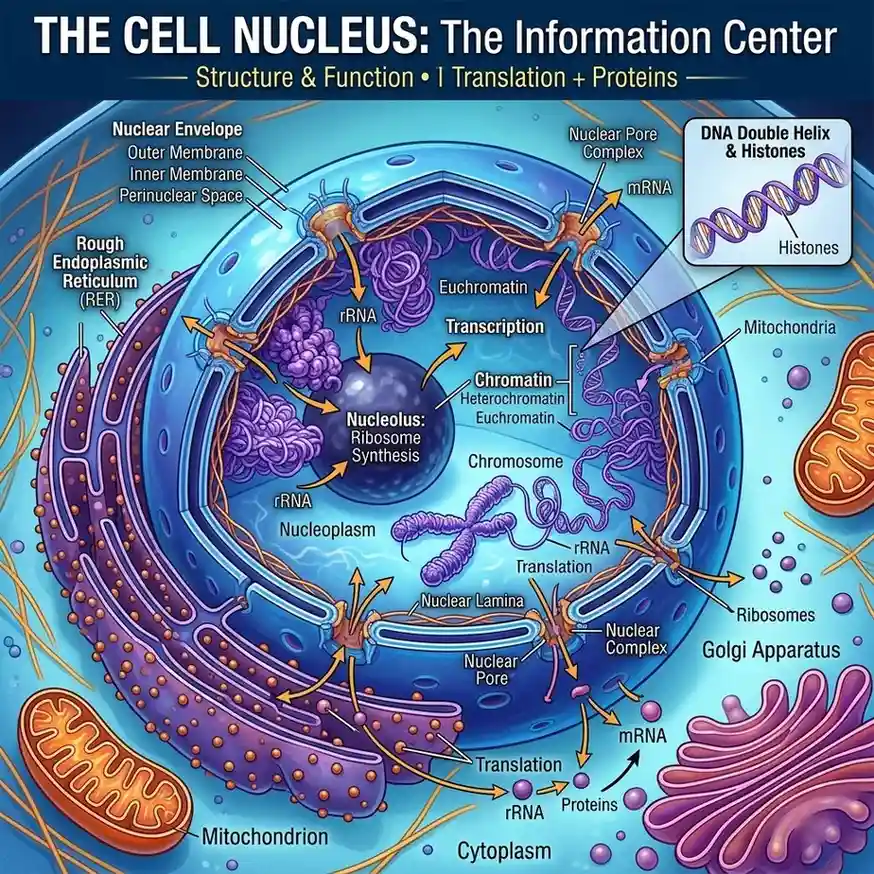
The Cell Nucleus: Structure, Types, Chemical Composition, and Functions Explained Simply

Labeled diagram of a eukaryotic cell nucleus showing nuclear envelope, nucleolus, chromatin, and nuclear pores.

Definition: The nucleus is a membrane-bound organelle found in eukaryotic cells that stores genetic material, controls gene expression, and directs cell growth and reproduction. Pronunciation: /ˈnjuːkliəs/ (NEW-klee-us) Read morePhotosynthesis: Process, Equation, and Diagram ExplainedOrigin: The word comes from Latin “nucleus,” meaning kernel or inner part. Robert Brown first used this term in 1831 when he … Read more

DNA, Structure, Function, Types, and Examples Explained

Double helical DNA strand glowing in light and dark blue shades against a futuristic scientific background.

Definition: DNA stands for deoxyribonucleic acid. It acts as the instruction manual inside every living cell. DNA tells cells how to grow, function, and reproduce. Pronunciation: dee-EN-AY Read morePhotosynthesis: Process, Equation, and Diagram ExplainedOrigin: Scientists coined the term “DNA” from the chemical name deoxyribonucleic acid. The word “nucleic” comes from the nucleus, where DNA lives … Read more

Cell Organelles: Structure, Functions, and Examples Explained

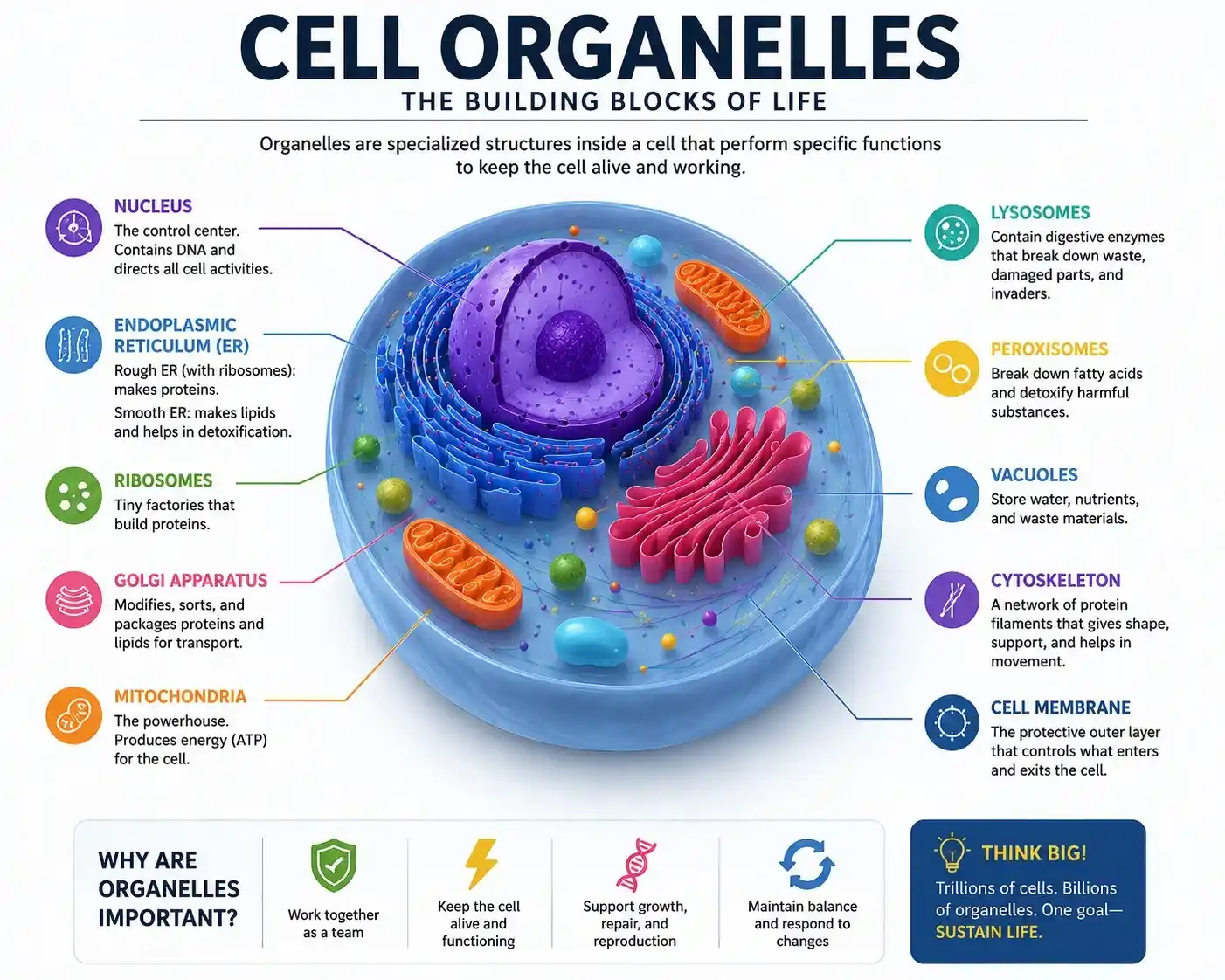
Colorful educational infographic of cell organelles showing a 3D animal cell with labeled structures including the nucleus, mitochondria, Golgi apparatus, ribosomes, endoplasmic reticulum, lysosomes, vacuoles, cytoskeleton, and cell membrane.

Definition: Cell organelles are specialized structures inside living cells. Each one performs a specific job to keep the cell healthy and working. Pronunciation: /sel ɔːrɡəˈnɛlz/ (sell or-guh-NELZ) Read morePhotosynthesis: Process, Equation, and Diagram ExplainedOrigin: The word “organelle” comes from Latin. “Organellum” means “little organ.” Scientists chose this name because organelles work like tiny organs inside … Read more

Ecosystem: Examples, Classification, Features, and Applications

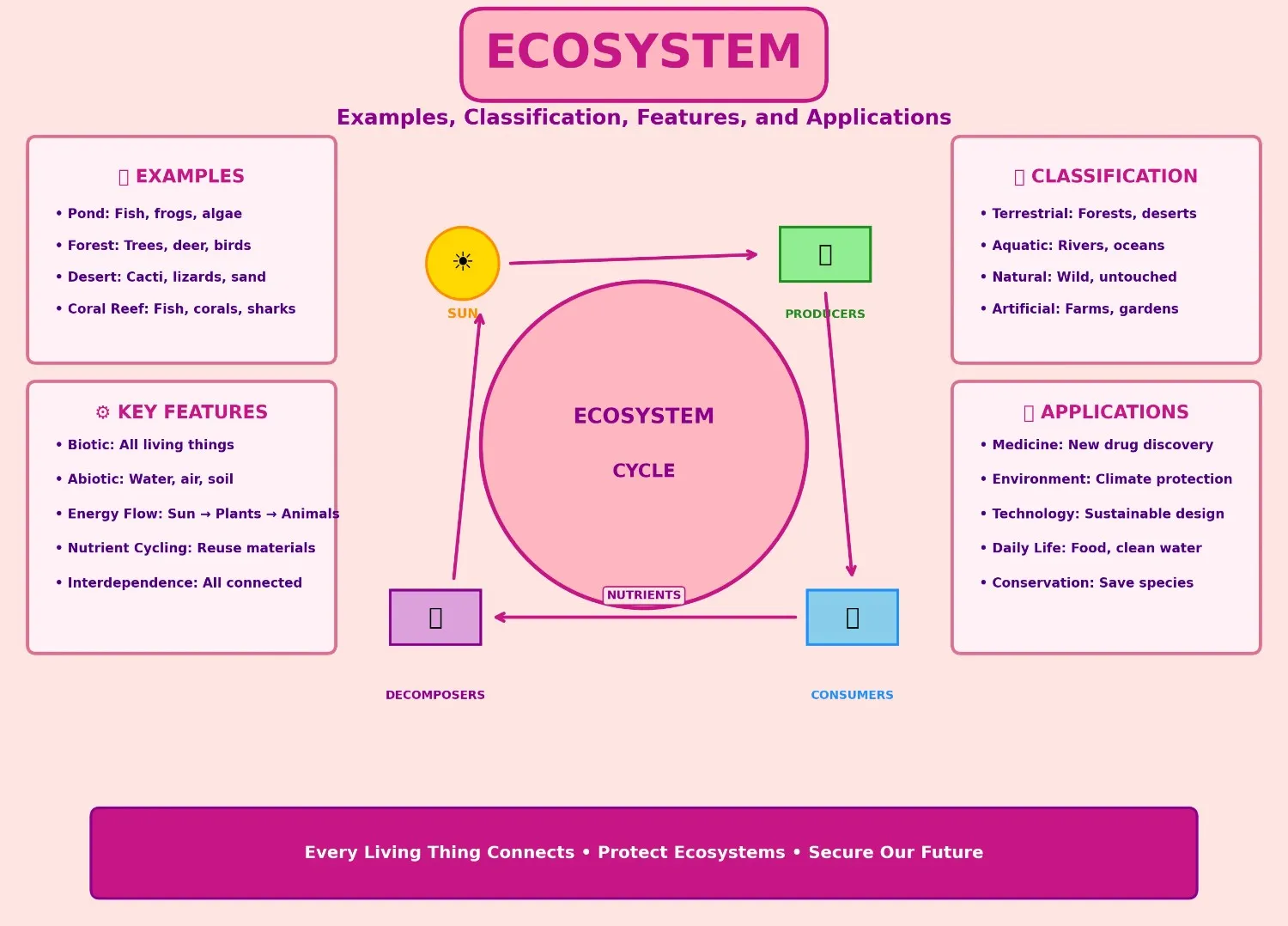
Infographic with a pink background titled "ECOSYSTEM: Examples, Classification, Features, and Applications." The central diagram shows the ecosystem cycle with arrows connecting the Sun to Producers (green), Producers to Consumers (blue), Consumers to Decomposers (purple), and Decomposers back to the Sun. Four corner boxes display: Examples (pond, forest, desert, coral reef), Classification (terrestrial, aquatic, natural, artificial), Key Features (biotic, abiotic, energy flow, nutrient cycling, interdependence), and Applications (medicine, environment, technology, daily life, conservation). A dark pink banner at the bottom reads "Every Living Thing Connects • Protect Ecosystems • Secure Our Future.

Definition: An ecosystem includes all living things and their physical surroundings in a specific area. Living things interact with each other and with non-living factors like water, air, and soil. Pronunciation: EE-koh-sis-tum Read moreWhat Are Living Things? Definition, Characteristics, ExamplesOrigin: The word “ecosystem” comes from two Greek words. “Eco” means house or household. “System” means … Read more

CRISPR/Cas9 Technology: Mechanism, Applications, and Real World Examples

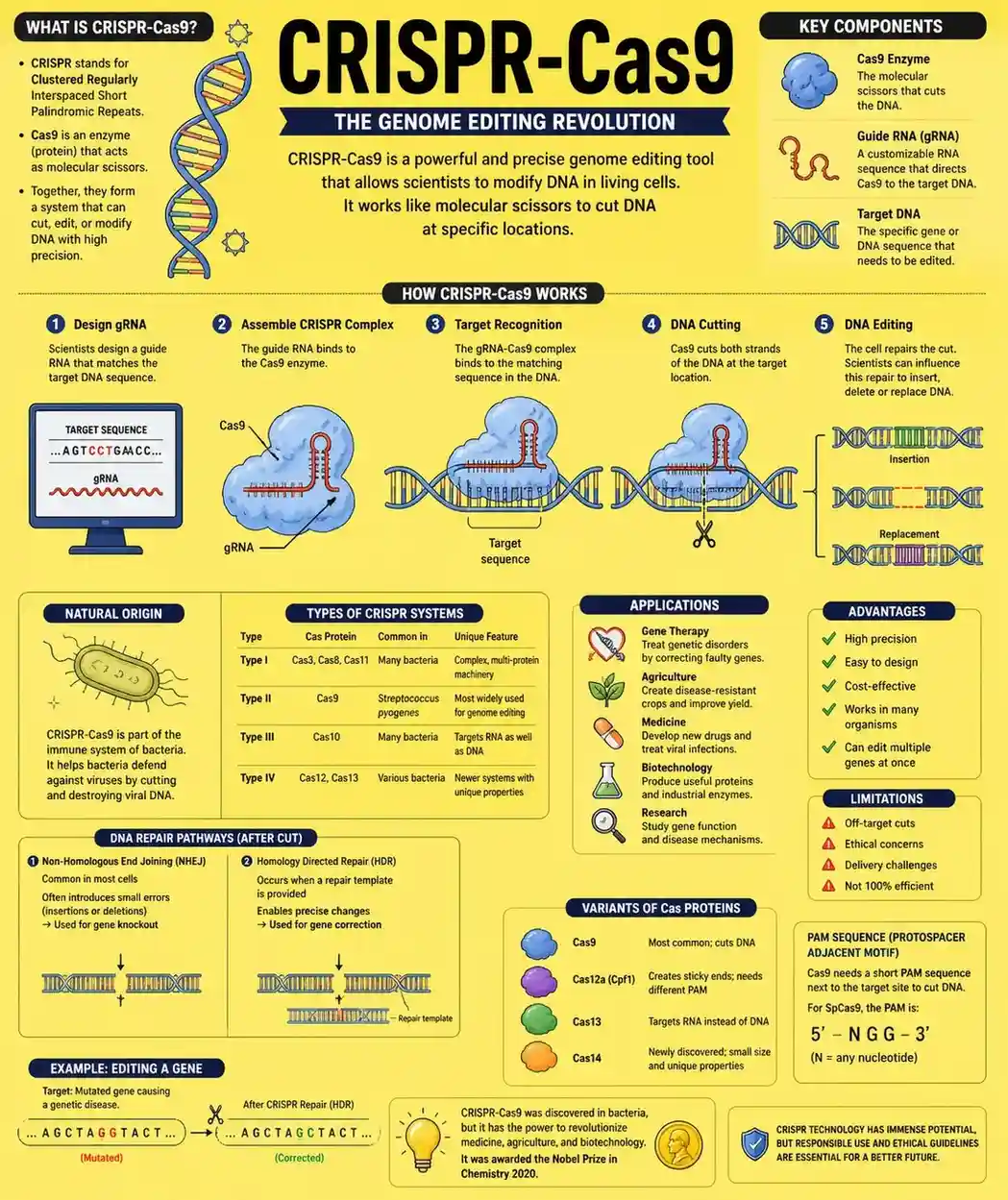
Illustration of CRISPR-Cas9 gene-editing system showing guide RNA directing Cas9 protein to cut DNA at a specific location.

Definition: CRISPR CAS9 technology gives scientists a precise tool to cut and edit DNA inside living cells. Pronunciation: CRISPER-CASS-nine Read morePhotosynthesis: Process, Equation, and Diagram ExplainedOrigin: Scientists coined the word “CRISPR” to describe the clustered repeat patterns they observed in bacterial DNA. Full Acronym: CRISPR stands for Clustered Regularly Interspaced Short Palindromic Repeats. Cas9 stands … Read more

Kingdom Monera: Characteristics, Classification, Importance and Examples

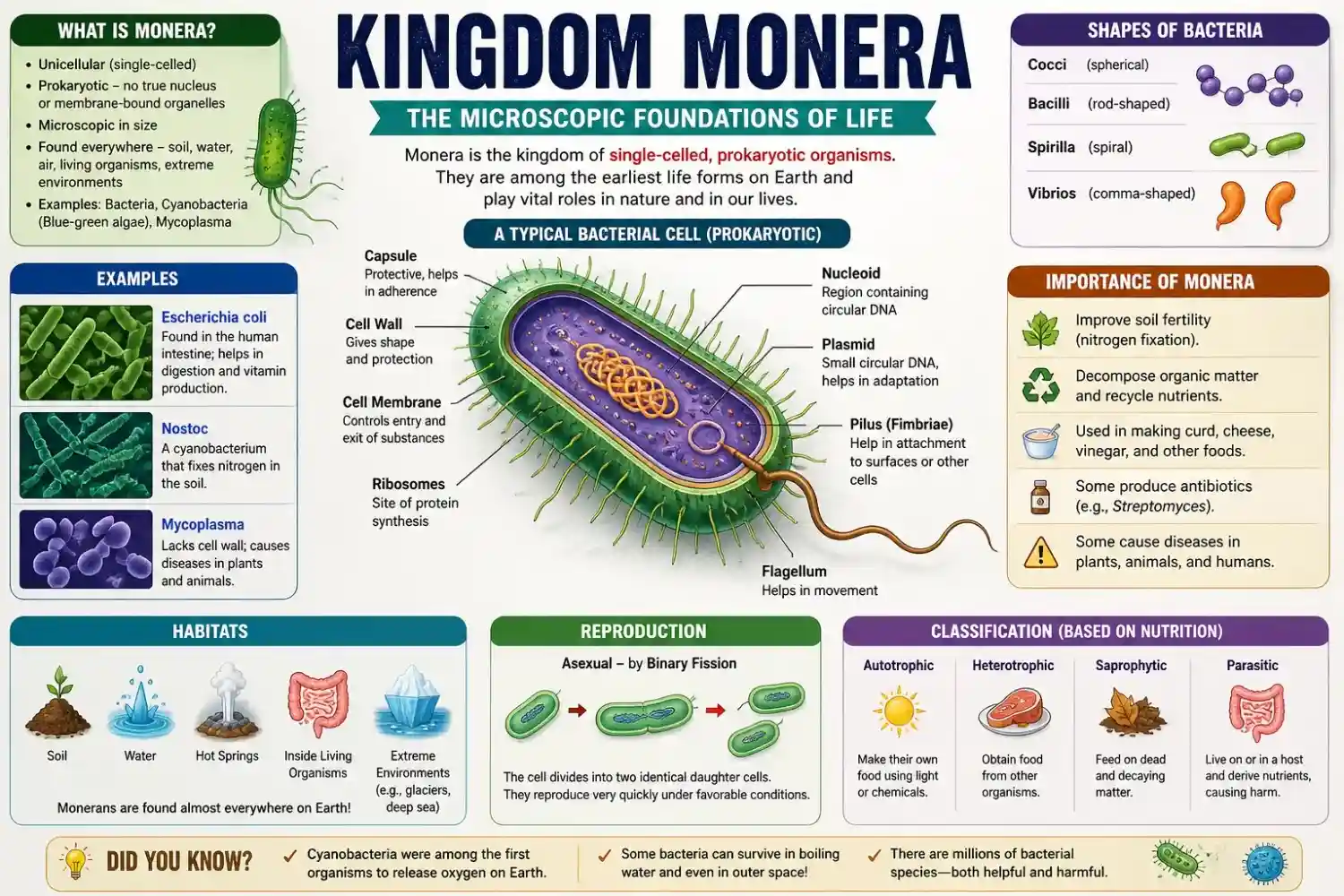
Colorful educational infographic of Kingdom Monera showing a labeled bacterial cell structure, different bacterial shapes, habitats, reproduction by binary fission, and ecological importance.

Definition: Kingdom Monera includes all single-celled organisms that lack a true nucleus and membrane-bound organelles. These organisms represent the most basic form of life. Pronunciation: muh-NEER-uh Read morePhotosynthesis: Process, Equation, and Diagram ExplainedOrigin: The word “Monera” comes from the Greek word “moneres,” which means “single” or “solitary.” Scientists chose this name because these organisms live … Read more

Viruses: Structure, Classification, Working, and Characteristics

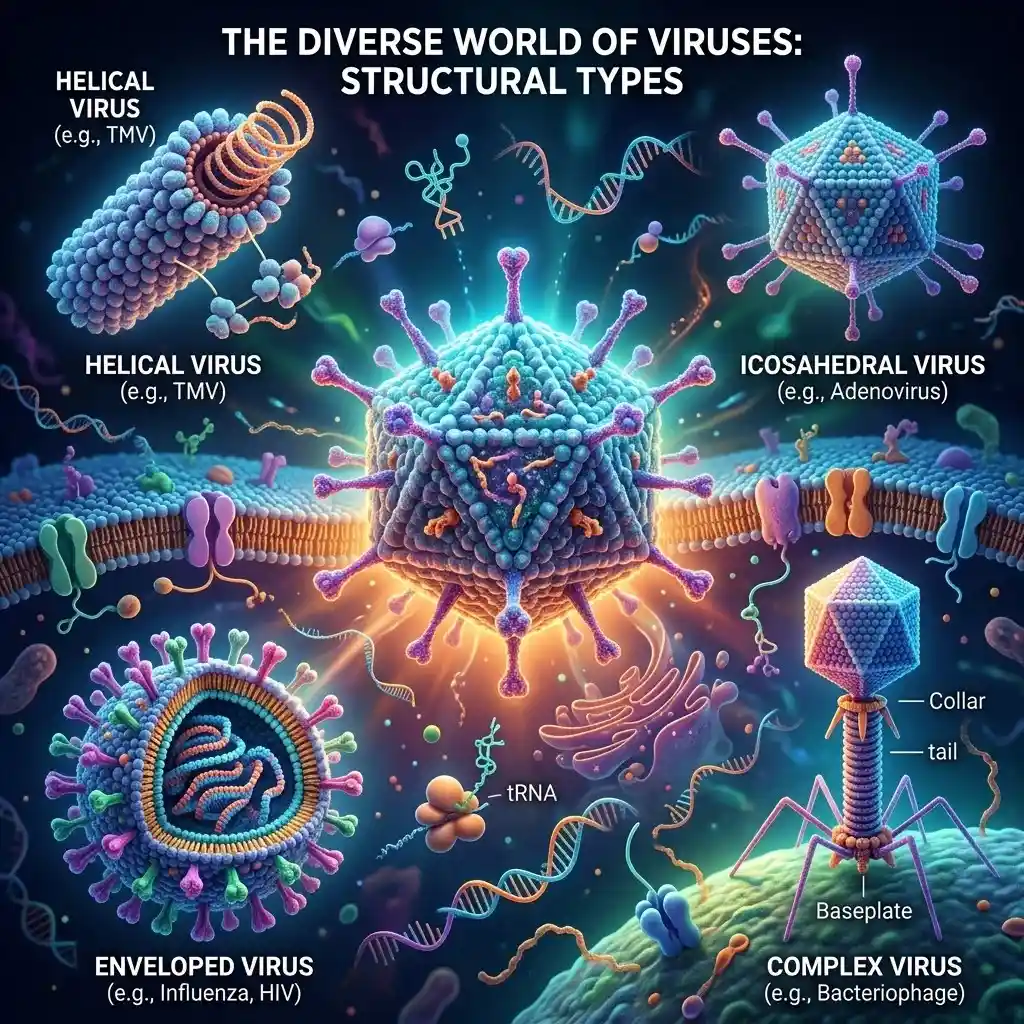
Illustration showing different types of viruses including enveloped virus, bacteriophage, and helical and icosahedral virus structures with labeled parts such as capsid, nucleic acid, and envelope.

Definition: Viruses are tiny infectious agents that invade living cells and force them to make copies of the virus. Pronunciation: VY-rus-es (singular: VY-rus) Read morePhotosynthesis: Process, Equation, and Diagram ExplainedOrigin: The word “virus” comes from the Latin word “virus.” This word originally meant poison or slimy liquid. Introduction Viruses slip into our lives like invisible … Read more

Useful and Harmful Bacteria: Structure, Working, Classification, Uses

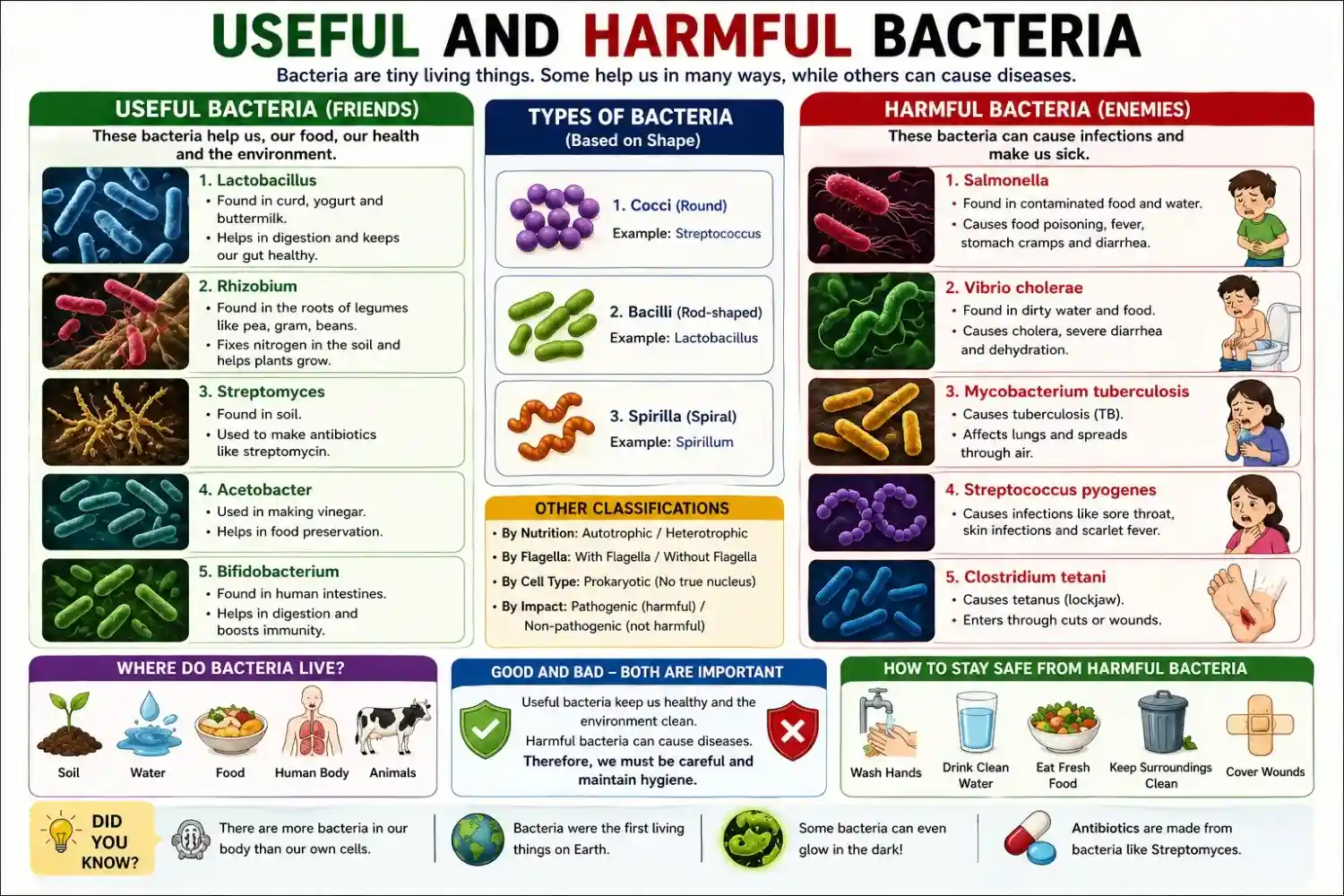
This colorful educational infographic explains the difference between useful and harmful bacteria in a simple and visual way. It shows helpful bacteria such as Lactobacillus and Rhizobium that support digestion and improve soil fertility. In contrast, it highlights harmful bacteria like Salmonella and Vibrio cholerae that cause diseases. Moreover, the image includes clear labels, types, and examples to help students understand the topic easily. As a result, it serves as an effective learning tool for beginners and young learners who want to grasp bacterial roles in daily life and health.

Definition: Useful and harmful bacteria are tiny living things that either help or hurt other organisms. Pronunciation: USE-ful and HARM-ful bak-TEER-ee-uh Read morePhotosynthesis: Process, Equation, and Diagram ExplainedOrigin: The word “bacteria” comes from the Greek word “bakterion.” Bakterion means small rod or staff. Introduction Have you ever eaten yogurt and wondered what makes it thick … Read more