
Definition: Viruses are tiny infectious agents that invade living cells and force them to make copies of the virus.
Pronunciation: VY-rus-es (singular: VY-rus)
Origin: The word “virus” comes from the Latin word “virus.” This word originally meant poison or slimy liquid.
Viruses slip into our lives like invisible plot-twisters, and suddenly a simple day turns into a chorus of sneezes. Have you ever caught a cold and wondered what caused it? At first glance, you might suspect bacteria or dust. However, the real culprit is far smaller and far more intriguing. Viruses are microscopic agents that you cannot see without powerful instruments, yet they influence health on a global scale.
Moreover, viruses do not limit themselves to humans alone. They infect animals, plants, and even bacteria, which shows their remarkable adaptability. As a result, viruses play a central role in both disease and biological research. Therefore, understanding viruses becomes essential not only for personal health but also for scientific progress.
In addition, doctors and researchers constantly study viruses to develop vaccines, antiviral drugs, and preventive strategies. Consequently, when you understand how viruses spread and operate, you begin to see why simple actions like washing hands, wearing masks, and getting vaccinated make a powerful difference.
In this article, you will explore the fascinating world of viruses. First, you will learn what viruses are and how they function. Then, you will discover how viruses invade cells and multiply. Finally, you will understand how scientists fight viruses and why these tiny entities continue to challenge our very definition of life.
What Are Viruses?
Viruses are microscopic particles. They are much smaller than bacteria. A virus contains genetic material wrapped in a protein coat. This genetic material holds instructions for making new viruses. However, a virus cannot reproduce on its own. It needs a living host cell. For example, the influenza virus invades human lung cells. The tobacco mosaic virus infects plant leaves.
Viral Classification Unlocked: A Clear and Engaging Breakdown
Viruses do not follow a single blueprint. Instead, they come in a stunning variety of shapes, genetic systems, and strategies. Therefore, scientists classify viruses using multiple logical criteria. Let us explore each classification step by step, with clarity and a bit of curiosity.
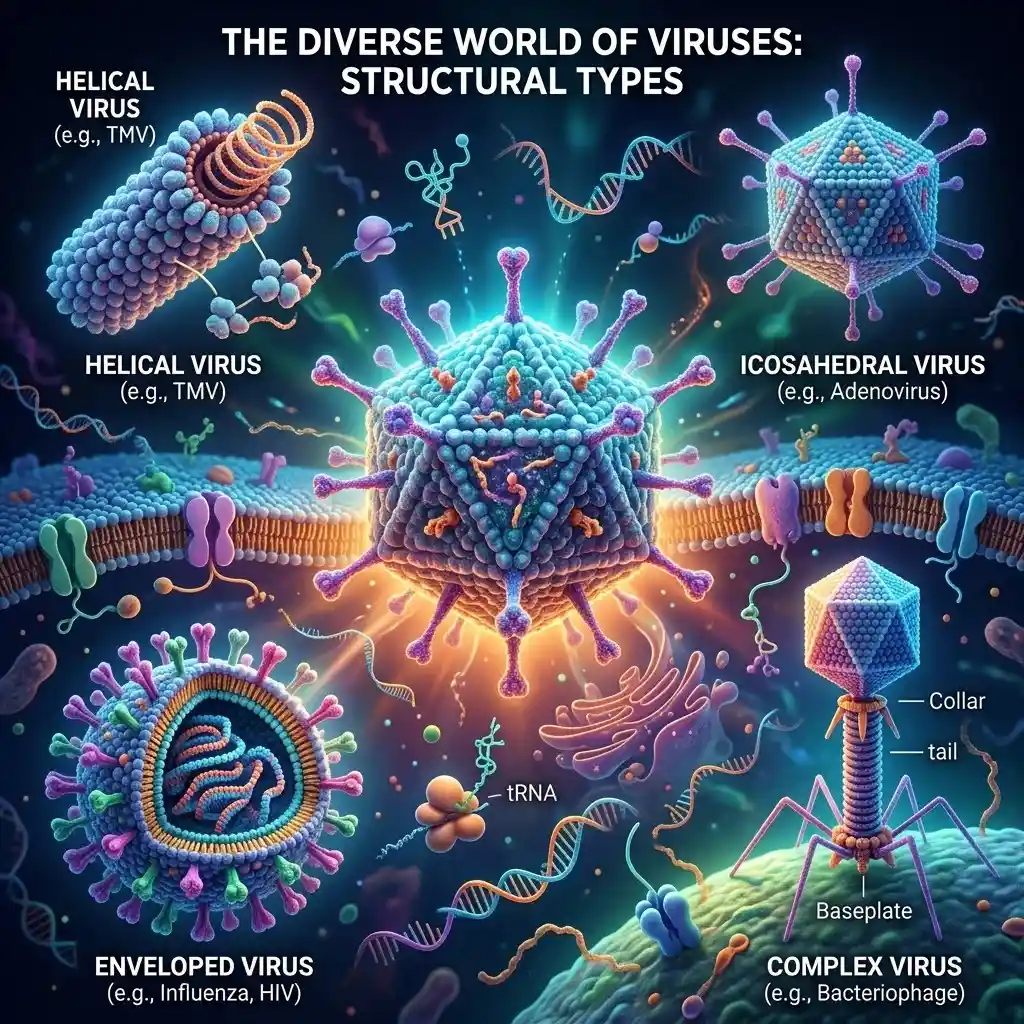
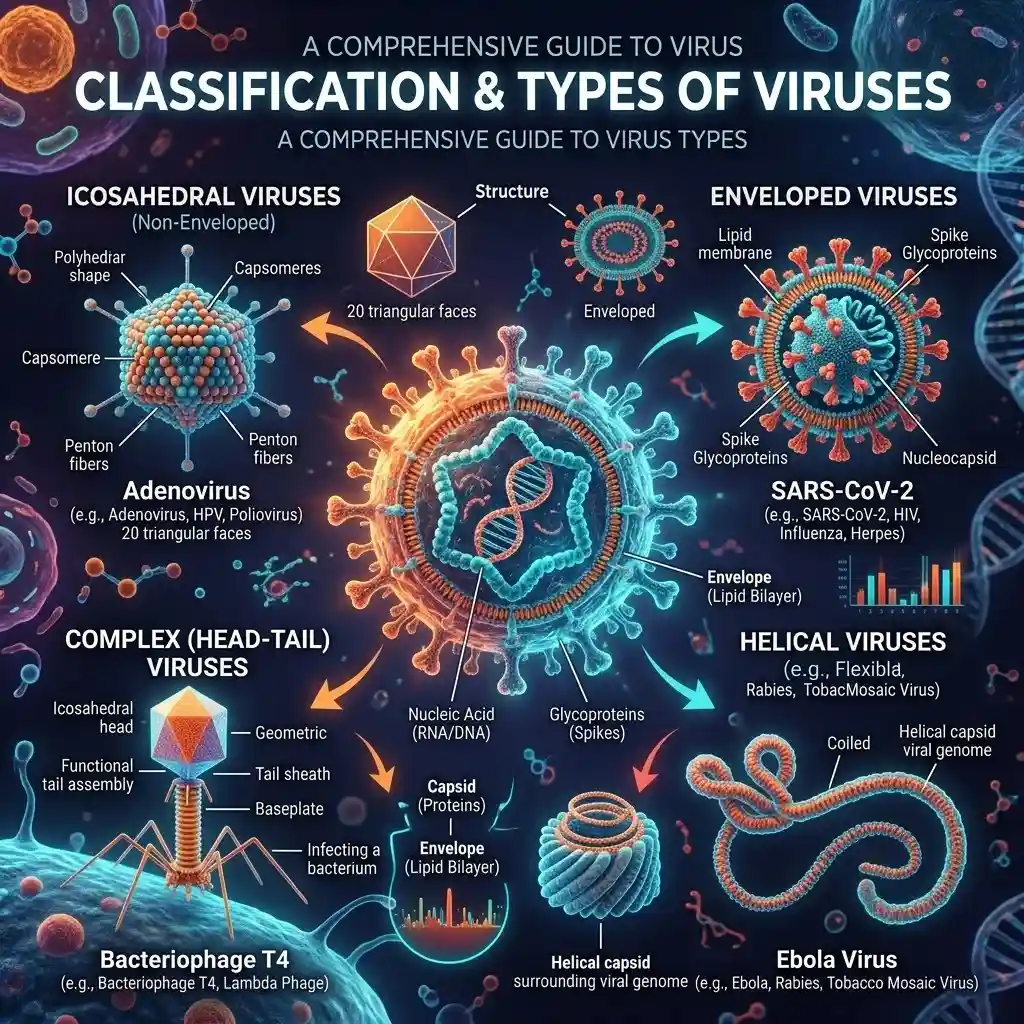
1. Shape-Based Classification of Viruses
First of all, the physical structure of viruses provides an easy way to group them.
- Helical Viruses
- These viruses appear like spiral tubes or coiled springs.
- Their genetic material winds inside a cylindrical protein coat.
- Example: Tobacco mosaic virus
- Icosahedral Viruses
- These viruses look like geometric spheres with 20 triangular faces.
- This structure provides maximum stability with minimal material.
- Example: Poliovirus
- Enveloped Viruses
- These viruses carry an outer lipid envelope taken from host cells.
- This layer helps them enter new cells more easily.
- Example: HIV
- Complex Viruses
- These viruses display intricate designs with heads, tails, and fibers.
- They often resemble microscopic lunar landers 🚀
- Example: Bacteriophages
2. Classification by Genetic Material
Next, scientists examine the type of genetic code inside viruses.
- DNA Viruses
- These viruses store genetic information in DNA.
- DNA acts as a stable blueprint for replication.
- Examples: Herpes virus, Pox virus
- RNA Viruses
- These viruses use RNA as their genetic material.
- RNA acts quickly but mutates more frequently.
- Examples: Influenza virus, Coronavirus
- Retroviruses
- These special viruses convert RNA into DNA inside host cells.
- They integrate their code into the host genome.
- Example: HIV
3. Host-Based Classification of Viruses
Furthermore, viruses specialize in infecting specific hosts.
- Animal Viruses
- These viruses infect humans and other animals.
- They often target specific tissues or organs.
- Example: Rabies virus
- Plant Viruses
- These viruses infect crops and plants.
- They can reduce agricultural productivity.
- Example: Tomato spotted wilt virus
- Bacteriophages
- These viruses infect bacteria only.
- Interestingly, they help scientists fight bacterial infections.
- They act like microscopic bacterial predators
4. Classification by Mode of Attack
In addition, viruses differ in how they interact with host cells.
- Lytic Viruses
- These viruses act fast and aggressively.
- They replicate quickly and burst the host cell.
- This leads to immediate cell death
- Lysogenic Viruses
- These viruses remain hidden inside host DNA.
- They replicate silently along with the host cell.
- Later, they may activate and destroy the cell
5. Envelope-Based Classification
Another important distinction depends on the outer covering of viruses.
- Enveloped Viruses
- These viruses have a lipid envelope.
- The envelope helps in cell entry through membrane fusion
- However, it makes them sensitive to heat and drying
- Examples: HIV, Influenza
- Non-Enveloped (Naked) Viruses
- These viruses lack an outer envelope
- They are more resistant to harsh conditions
- Examples: Poliovirus, Adenovirus
6. Simple Yet Powerful Explanation of Viruses
Finally, let us simplify the behavior of viruses with an engaging analogy.
- Imagine a virus as a digital hacker 💻
- The hacker writes a harmful program but cannot run it alone
- Similarly, viruses carry genetic instructions but cannot function independently
- The virus enters a host cell, just like a program entering a computer
- Then, the virus hijacks the cell’s machinery to make copies
- Afterward, new viruses burst out and infect other cells
- As a result, the infection spreads rapidly, just like malware across a network
Final Insight
Viruses may be tiny, yet their diversity is vast and strategic. Because of this, scientists must classify viruses in multiple ways to fully understand them. The more we study viruses, the better we prepare ourselves to control and prevent viral diseases.. For another informative article click here.
Key Features and Characteristics of Viruses
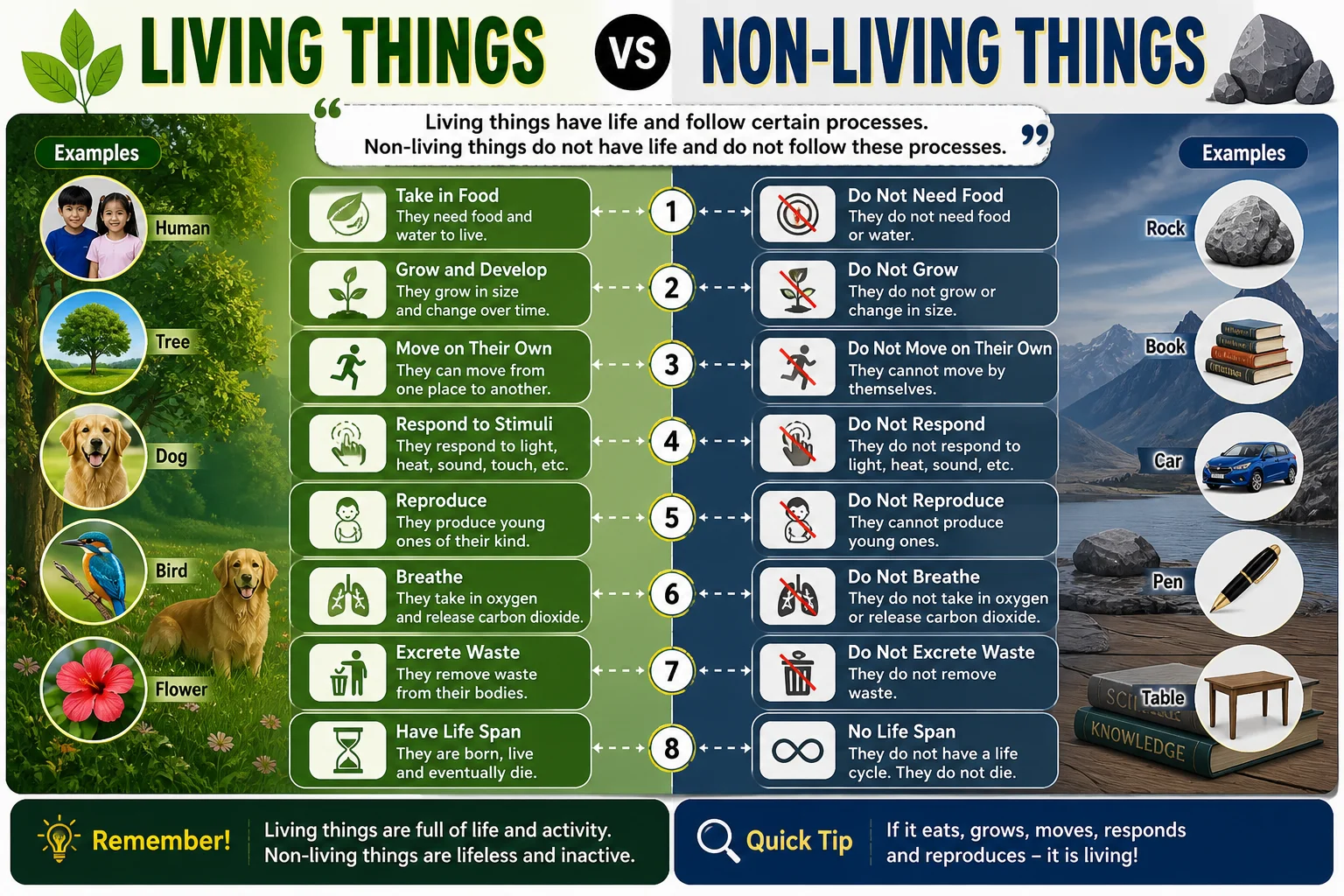
- Viruses are not cells. They lack cytoplasm, organelles, and cell membranes.
- Viruses are obligate parasites. This means they must live inside host cells.
- Viruses are extremely small. They measure 20 to 300 nanometers across.
- Viruses contain either DNA or RNA. They never contain both.
- Viruses have a protein coat called a capsid. This coat protects the genetic material.
- Some viruses have an outer envelope made of lipids.
- Viruses do not eat, breathe, or grow on their own.
- Viruses do not respond to stimuli like living cells do.
Types of Viruses
DNA Viruses
DNA viruses store their code in DNA. They copy this DNA inside host cells. Examples include herpes simplex virus and smallpox virus.
RNA Viruses
RNA viruses store their code in RNA. They copy this RNA inside host cells. Examples include influenza virus and measles virus.
Retroviruses
Retroviruses are special RNA viruses. They carry an enzyme called reverse transcriptase. This enzyme converts RNA into DNA. The DNA then inserts into host chromosomes. HIV is the most famous retrovirus.
How Do Viruses Work?
Step-by-Step Viral Infection Process (Structured & Scientific)
Viruses follow a highly organized invasion cycle to enter, exploit, and exit host cells. Each stage is precise and biologically optimized for replication.
1. Attachment (Host Recognition Phase)
- The virus first attaches to the surface of a host cell.
- This occurs through viral surface proteins (ligands).
- These proteins bind specifically to cell receptors (lock-and-key mechanism).
- This step determines host specificity (which organism or cell type can be infected).
- Example: Some viruses only bind to immune cells, nerve cells, or lung cells.
2. Entry (Penetration into the Cell)
Once attached, the virus enters the host cell using different strategies:
- Enveloped viruses
- Fuse directly with the cell membrane
- Release viral contents into the cytoplasm
- Non-enveloped viruses
- Enter through endocytosis (cell swallowing mechanism)
- Or form pores/ruptures in the membrane to inject genetic material
- This step ensures the virus reaches the internal cellular environment safely.
3. Uncoating (Genetic Material Release)
- The viral capsid is broken down or removed.
- The virus releases its genetic material (DNA or RNA) into the host cell.
- This genetic material is now free to interact with cellular systems.
- At this stage, the virus becomes fully dependent on the host.
4. Replication & Biosynthesis (Hijacking Phase)
- The viral genome takes control of the host’s biochemical machinery.
- The host cell is forced to:
- Copy viral genetic material
- Produce viral proteins (capsids, enzymes, structural units)
- Ribosomes and enzymes are redirected for viral production instead of normal cell function.
- This stage is the “factory takeover phase” of infection.
5. Assembly (Construction of New Viruses)
- Newly produced viral components are assembled inside the cell.
- Capsid proteins package the viral genome.
- Fully formed new virions (virus particles) are created.
- This step is highly efficient, producing hundreds to thousands of viruses per cell.
6. Release (Escape and Spread)
- Newly formed viruses exit the host cell through:
- Cell lysis (cell bursting and death)
- Budding (in enveloped viruses, where they take part of the membrane)
- After release:
- Viruses spread to nearby healthy cells
- The infection expands rapidly within tissues
- In many cases, the host cell dies due to structural damage and exhaustion.
Extra Insight (Why This Process Is So Effective)
- Viruses do not waste energy on metabolism; they fully depend on host cells.
- Their cycle is optimized for:
- Rapid replication
- Efficient spread
- Immune evasion
- This is why viral infections can escalate quickly inside the body.
Importance of Viruses
Daily Life: Viruses cause common colds and flu. These illnesses keep people home from school and work. Therefore, handwashing and vaccines protect communities.
Environment: Viruses infect bacteria in oceans. This process controls bacterial populations. Moreover, viruses transfer genes between bacteria. This gene transfer drives evolution.
Human Health: Scientists study viruses to design vaccines. Vaccines train the immune system to recognize and destroy specific viruses. Moreover, researchers use modified viruses to deliver gene therapy.
Examples of Viruses in Real Life
The common cold virus spreads through sneezes and coughs. It invades nose and throat cells. The rabies virus travels through animal bites. It attacks the brain and causes death without treatment. The coronavirus family includes SARS-CoV-2. This virus causes COVID-19. It invades lung cells and triggers severe breathing problems.
Viruses for Different Age Groups
Tiny Invaders Explained for Young Minds
First of all, picture a virus as a tiny, sneaky robot carrying secret instructions. However, this robot cannot build copies on its own. Instead, it searches for a factory. In this case, your body’s cells act like factories.
Once inside, the robot rewrites the factory’s instructions. As a result, the factory stops its normal work and starts producing more robots. Soon after, these new robots burst out and spread to other factories.
Meanwhile, your immune system behaves like a team of sharp security guards. They constantly patrol your body. When they detect these robotic invaders, they act quickly to stop them.
This is where vaccines play a clever role. They show the guards a “preview image” of the robot. Consequently, the guards recognize the threat instantly in the future and respond faster.
Core Concepts for Biology Students
To begin with, viruses are classified as acellular entities. In other words, they lack a true cellular structure. Instead of full cells, they consist of genetic material, either DNA or RNA, enclosed within a protein coat known as a capsid. In some cases, they also possess a lipid envelope derived from host cell membranes.
Moreover, viruses display strong host specificity. This means each virus targets particular cell types. For instance, HIV specifically infects helper T lymphocytes, which play a central role in immune defense.
When it comes to replication, viruses follow two primary pathways. On one hand, the lytic cycle leads to rapid replication and immediate destruction of the host cell. On the other hand, the lysogenic cycle allows viral DNA to integrate into the host genome, where it can remain dormant before activation.
Furthermore, antiviral drugs work by targeting specific viral enzymes or replication steps. However, antibiotics fail against viruses because they target bacterial structures that viruses simply do not possess.
Mechanistic Insights for Advanced Learners
At a deeper level, viruses blur the boundary between living and non-living systems. They lack metabolism and cannot reproduce independently. Nevertheless, they evolve efficiently through natural selection, which highlights their biological significance.
In terms of genomic diversity, viruses present an extraordinary range. For example, some possess genomes as small as 3,000 base pairs, while others extend up to 2.5 million base pairs. This variation reflects their adaptive complexity.
Additionally, viral entry into host cells occurs through multiple mechanisms. These include receptor-mediated endocytosis, membrane fusion, and, in certain bacteriophages, direct injection of genetic material.
Replication strategies also differ significantly. Positive-sense RNA viruses function directly as messenger RNA, allowing immediate protein synthesis. In contrast, negative-sense RNA viruses must first carry RNA-dependent RNA polymerase to generate a readable template. Similarly, retroviruses convert their RNA into DNA and integrate it into the host genome using integrase enzymes.
Importantly, emerging diseases such as COVID-19 highlight the concept of zoonotic spillover, where viruses transfer from animal hosts to humans. This transition often triggers global health challenges.
Finally, the quasispecies theory explains the rapid mutation rates observed in RNA viruses. As a result, these viruses generate extensive genetic diversity within short timeframes. Consequently, this variability complicates vaccine design and long-term immunity strategies.
Common Misconceptions About Viruses
Misconception: Viruses are alive.
Correction: Viruses lack metabolism and cannot reproduce alone. Therefore, most scientists classify them as non-living.
Misconception: Antibiotics kill viruses.
Correction: Antibiotics target bacterial structures. They do not harm viruses. Doctors prescribe antiviral drugs for viral infections.
Misconception: All viruses cause disease.
Correction: Some viruses infect bacteria and protect humans. Moreover, some animal viruses cause no symptoms.
Misconception: Vaccines contain live viruses that always make you sick.
Correction: Some vaccines contain weakened viruses. These viruses trigger immunity without causing severe disease. Other vaccines use only viral proteins.
Difference Between Viruses and Related Concepts
Viruses vs. Bacteria: Bacteria are living cells. They eat, grow, and reproduce on their own. Viruses are not cells. They need host cells to multiply.
Viruses vs. Bacteriophages: Bacteriophages are viruses that infect bacteria. They are a type of virus, not a separate group.
Viruses vs. Prions: Prions are misfolded proteins. They cause brain diseases. Unlike viruses, prions lack genetic material entirely.
Applications of Viruses
Medicine: Scientists engineer viruses to fight cancer. These oncolytic viruses infect and destroy tumor cells. Moreover, viral vectors deliver healthy genes into patients with genetic disorders.
Environment: Researchers use bacteriophages to clean water. These viruses kill harmful bacteria without chemicals.
Technology: Biologists use viruses in genetic engineering. They insert foreign genes into viral DNA. Then they use the virus to deliver these genes into target cells.
Daily Life: Vaccines protect against viral diseases. The flu shot contains weakened or killed virus particles. These particles train your immune system.
Interesting Facts About Viruses
- Scientists have discovered giant viruses called pandoraviruses. These viruses are larger than some bacteria.
- About 8 percent of human DNA comes from ancient viruses. These viral genes inserted themselves into our ancestors’ chromosomes.
- The ocean contains about 10 million viruses in every milliliter of seawater.
- Some viruses infect other viruses. Scientists call these virophages.
- The deadliest virus in history was the 1918 influenza virus. It killed about 50 million people worldwide.
- Viruses mutate rapidly. This is why you need a new flu shot every year.
FAQs
Q1: What are viruses?
Viruses are tiny infectious particles. They invade living cells and force them to make more viruses.
Q2: Are viruses alive?
Most scientists say viruses are not alive. They lack cells and cannot reproduce without hosts.
Q3: How do viruses spread?
Viruses spread through air, water, touch, and bodily fluids. They also spread through insect bites and contaminated food.
Q4: Can you cure a viral infection?
Doctors treat symptoms of viral infections. Antiviral drugs slow some viruses. However, the immune system usually clears the infection.
Q5: How do vaccines work against viruses?
Vaccines show the immune system a harmless piece of the virus. The immune system remembers this piece. It attacks quickly if the real virus appears.
How People Search for Viruses
- what are viruses
- simple explanation of viruses
- examples of viruses
- are viruses alive
- how do viruses spread
- difference between virus and bacteria
- types of viruses
- how do vaccines work
- common viral diseases
- interesting facts about viruses
Conclusion
Viruses are the smallest and strangest infectious agents on Earth. They challenge our understanding of life itself but are not cells. Viruses do not eat or breathe. However, they evolve, adapt, and spread with remarkable speed. Viruses cause devastating diseases like influenza, AIDS, and COVID-19. Therefore, scientists work tirelessly to understand them. They create vaccines and antiviral drugs to protect humanity. Moreover, viruses play surprising roles in evolution and gene transfer. Some viruses even help fight bacterial infections. In conclusion, these invisible invaders demand our respect and attention. Stay informed. Get vaccinated. Practice good hygiene. These simple actions protect you and your community from viral threats. More about viruses here.

Hi All! I’m Imran Abbas. I’m a Ph.D (scholar) in Structural Chemistry and I work in a number of domains like Bioinformatics, Literature, politics, sports and I’m a polyglot as well. I respect all irrespective of their ethnicity, locality and color. I’m always ready to learn new ideas and travel to different parts of the world.