Viruses: Structure, Classification, Working, and Characteristics

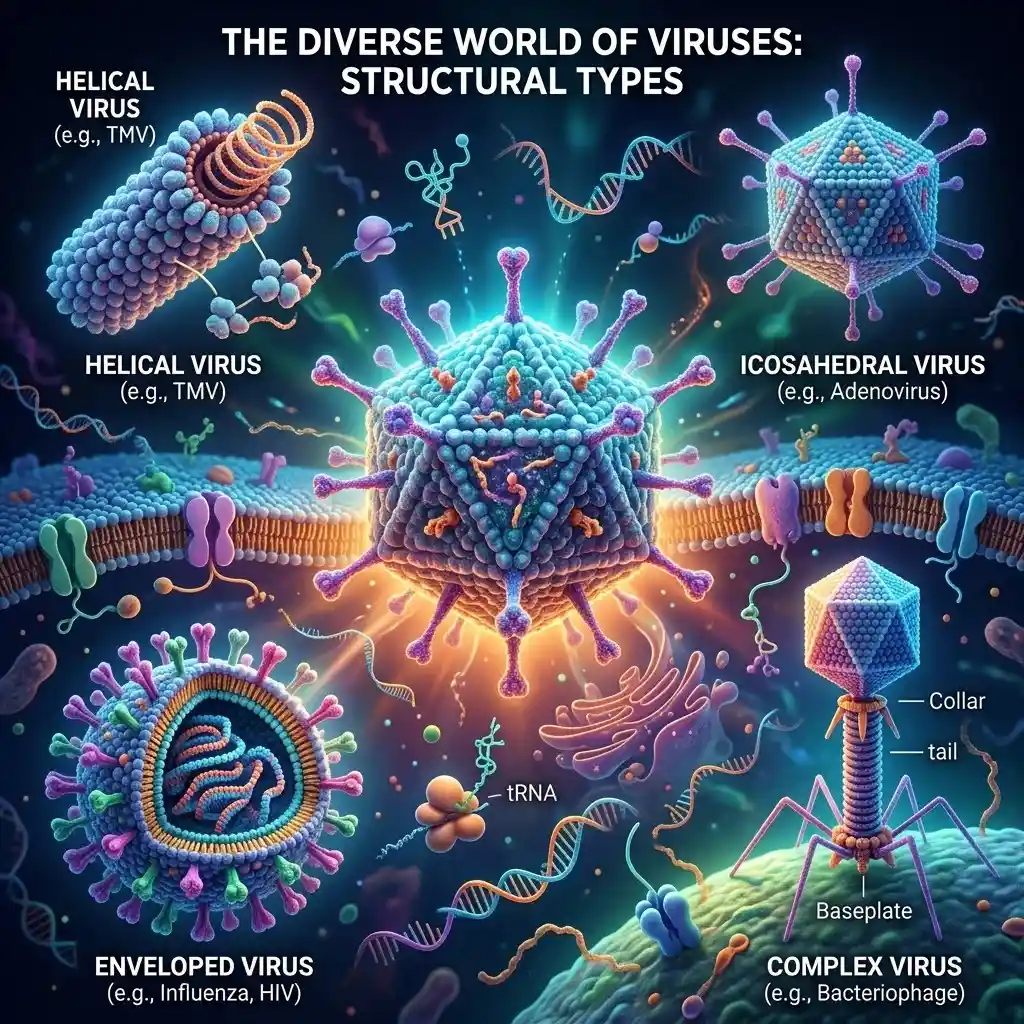
Illustration showing different types of viruses including enveloped virus, bacteriophage, and helical and icosahedral virus structures with labeled parts such as capsid, nucleic acid, and envelope.

Definition: Viruses are tiny infectious agents that invade living cells and force them to make copies of the virus. Pronunciation: VY-rus-es (singular: VY-rus) Read morePhotosynthesis: Process, Equation, and Diagram ExplainedOrigin: The word “virus” comes from the Latin word “virus.” This word originally meant poison or slimy liquid. Introduction Viruses slip into our lives like invisible … Read more

Useful and Harmful Bacteria: Structure, Working, Classification, Uses

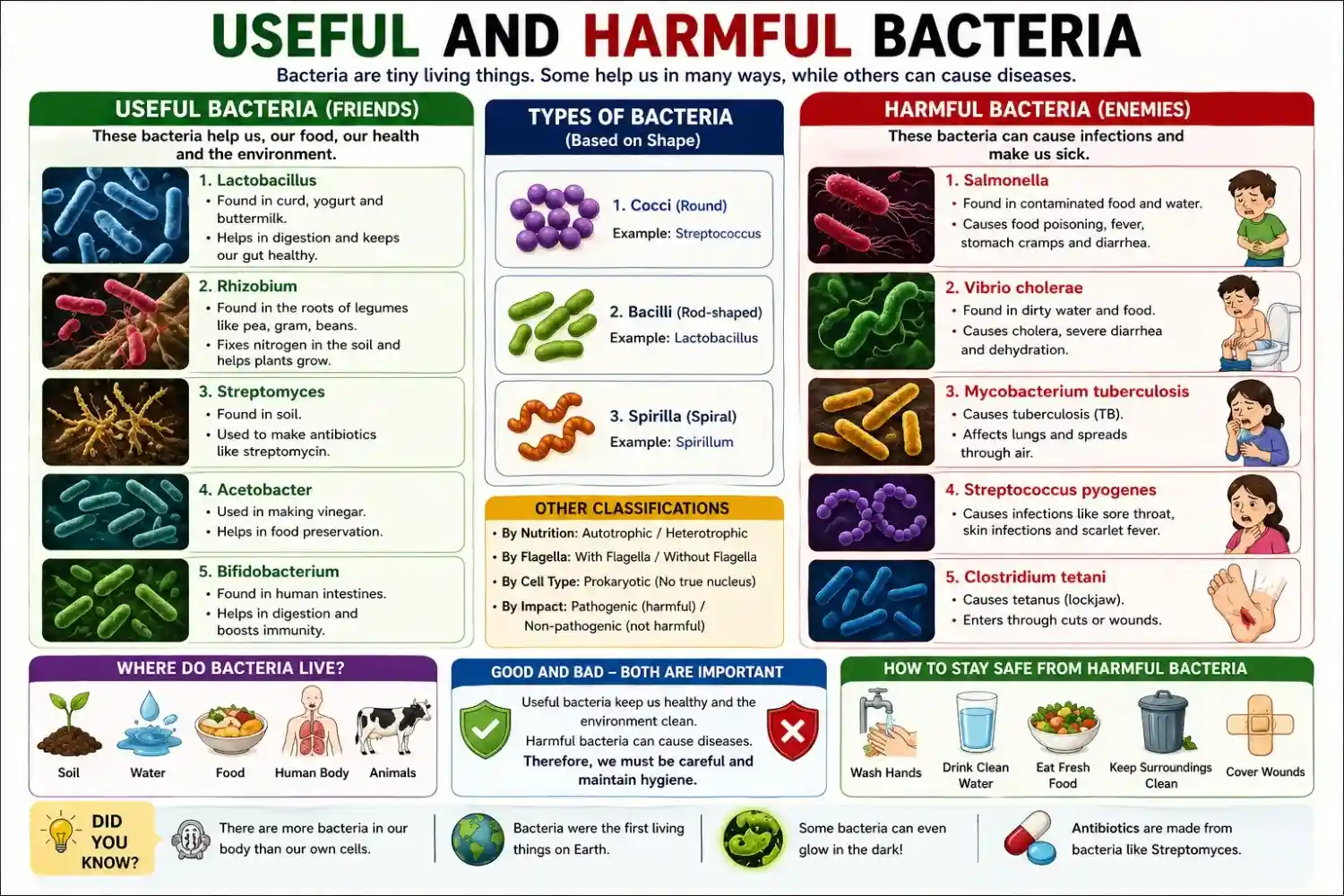
This colorful educational infographic explains the difference between useful and harmful bacteria in a simple and visual way. It shows helpful bacteria such as Lactobacillus and Rhizobium that support digestion and improve soil fertility. In contrast, it highlights harmful bacteria like Salmonella and Vibrio cholerae that cause diseases. Moreover, the image includes clear labels, types, and examples to help students understand the topic easily. As a result, it serves as an effective learning tool for beginners and young learners who want to grasp bacterial roles in daily life and health.

Definition: Useful and harmful bacteria are tiny living things that either help or hurt other organisms. Pronunciation: USE-ful and HARM-ful bak-TEER-ee-uh Read morePhotosynthesis: Process, Equation, and Diagram ExplainedOrigin: The word “bacteria” comes from the Greek word “bakterion.” Bakterion means small rod or staff. Introduction Have you ever eaten yogurt and wondered what makes it thick … Read more

Plants and Animals: Differences, Similarities, Examples and Uses

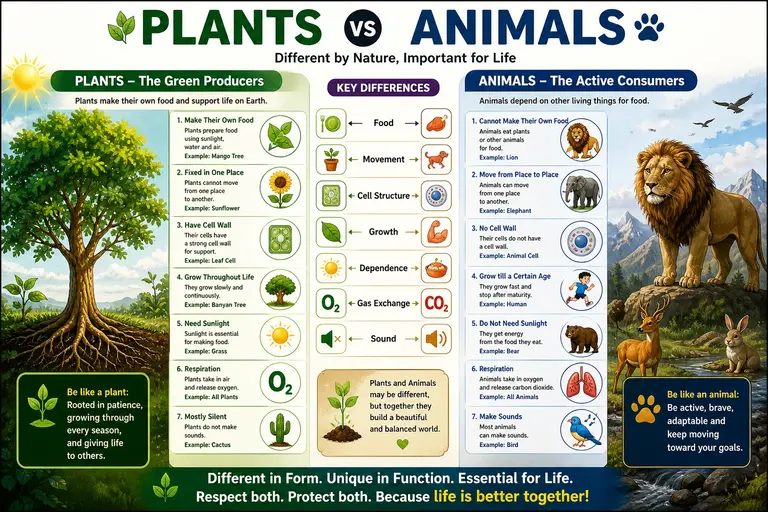
Colorful split infographic showing scientific differences between plants and animals with labeled features like photosynthesis, movement, cell structure, and nutrition

Definition: The difference between plants and animals refers to the special traits that separate these two groups of living things. Pronunciation: DIF-fer-ence be-TWEEN plants and AN-i-mals Read morePhotosynthesis: Process, Equation, and Diagram ExplainedOrigin: The word “plant” comes from the Latin word “planta.” Planta means sprout. The word “animal” comes from the Latin word “animalis.” Animalis … Read more

Characteristics of Living and Non Living Things: How to Tell What Is Alive

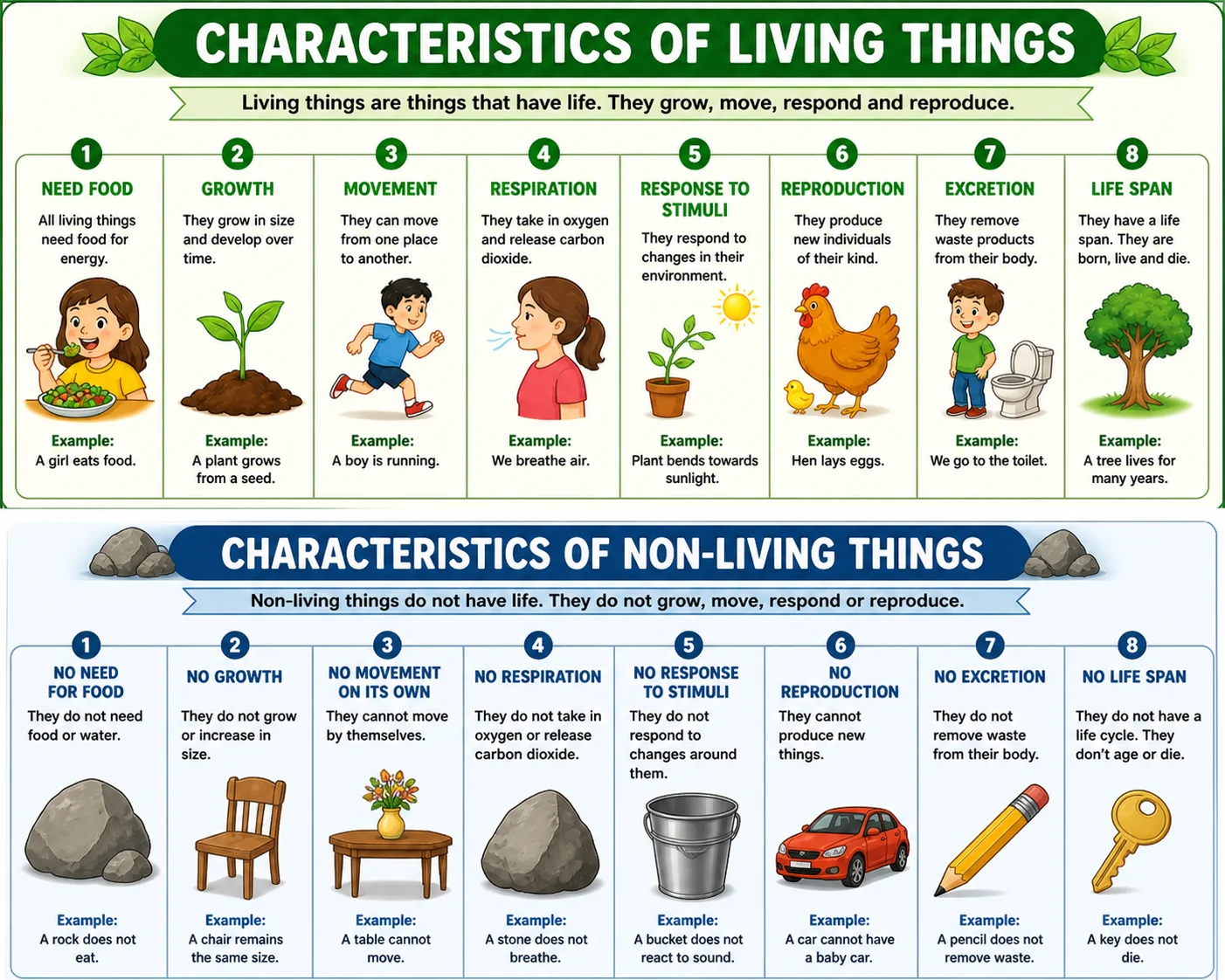
Creative infographic of living vs non-living things showing nature side with animals and plants and industrial side with objects like car, chair, and factory

Definition: Characteristics of living and non living things are the special traits that show whether something grows, breathes, moves, and needs food, or lacks these traits. Pronunciation: kar-ik-ter-IS-tiks (of LIV-ing and non-LIV-ing things) Read morePhotosynthesis: Process, Equation, and Diagram ExplainedOrigin: The word “characteristic” comes from the Greek word “kharakter.” This word means “a special mark … Read more

Cells and Their Types: Structure, Functions, Working and Examples

Colorful infographic of cells and their types showing prokaryotic and eukaryotic cells with labeled plant and animal cell structures

Definition: A cell is the smallest unit of life. All living things contain one or more cells. Pronunciation: selz (rhymes with “bells”) Read morePhotosynthesis: Process, Equation, and Diagram ExplainedOrigin: The word “cell” comes from the Latin word “cellula.” Cellula means “small room.” Introduction What Are Cells? Have you ever wondered what makes you alive? Your … Read more

Photosynthesis: Process, Equation, and Diagram Explained

Detailed diagram of photosynthesis showing sunlight, water, carbon dioxide, light reactions, Calvin cycle, glucose production, and oxygen release in a leaf

Definition: The process green plants use to make food from sunlight, water, and carbon dioxide. Pronunciation: /ˌfoʊ.t̬oʊˈsɪn.θə.sɪs/ (foh-toh-SIN-thuh-sis) Read moreCells and Their Types: Structure, Functions, Working and ExamplesOrigin: Greek words “photo” meaning light and “synthesis” meaning putting together. Introduction Photosynthesis makes your breakfast possible. You wake up hungry and pour cereal into a bowl. You … Read more