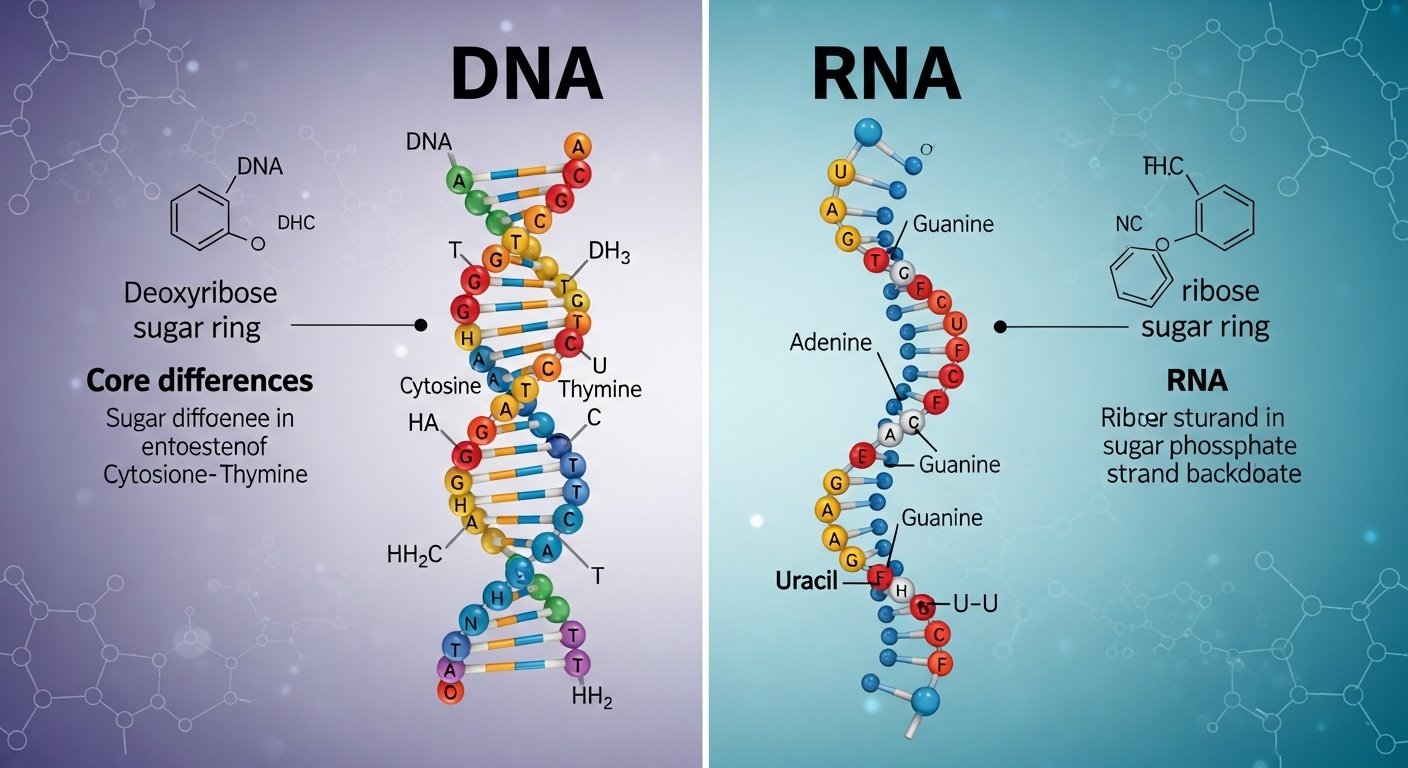
A young student once asked a doctor why every human looks a little different yet still belongs to the same species. The doctor smiled and explained that inside every cell lives a tiny instruction library. That library is written in two chemical languages called DNA and RNA. Understanding the difference between DNA and RNA helps us see how life stores information and how cells read it to build proteins and keep the body alive.
When scientists explain the difference between DNA and RNA, they often compare them to a blueprint and a messenger. DNA safely stores genetic plans, while RNA carries the instructions to the cell’s factories. The difference between DNA and RNA also explains why genes can be copied, expressed, and sometimes mutated. In modern biology, learning the difference between DNA and RNA is important for medicine, genetics, vaccines, and even crime investigation.
Recent discoveries have made this topic even more exciting. Scientists have found new RNA molecules that regulate genes, help treat diseases, and even power modern vaccines.
Dicovery of Both DNA and RNA
Discovery of DNA
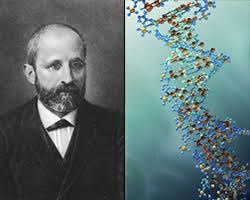
DNA was first discovered in 1869 by the Swiss scientist Friedrich Miescher. While studying white blood cells in pus taken from surgical bandages, he isolated a strange substance from the cell nucleus and called it “nuclein.” Later scientists realized that this substance was DNA, the molecule that carries genetic information. In 1953, the structure of DNA was explained by James Watson and Francis Crick, with important data from Rosalind Franklin. Their work revealed the famous double-helix structure, which showed how genetic information is stored and copied. See figure below…
Discovery of RNA
RNA was discovered gradually as scientists studied how cells use genetic information. The first hints came in the late 19th and early 20th centuries, but it was more clearly identified in the 1930s–1940s as a distinct molecule from DNA. Key contributions include:
- Phoebus Levene (Russian-American biochemist) identified ribonucleotides and proposed the structure of RNA in the 1910s–1920s.
- Severo Ochoa (Spanish-American biochemist) discovered enzymes in the 1950s that could synthesize RNA in the lab, showing how RNA could be created and function inside cells.
- Later, researchers like Arthur Kornberg helped understand RNA’s role in transferring genetic information from DNA to proteins. He is shown busy in his labs on the left side of frame below.
In short, RNA was identified over decades, with Phoebus Levene being credited for first isolating and naming it, and Severo Ochoa for showing how it functions biologically.. Image given below was taken from https://dnalc.cshl.edu/view/15672-Phoebus-Levene-c-1930-.html….

Key Difference Between the Both
DNA stores the genetic instructions of living organisms, while RNA helps use those instructions to make proteins and control cell activities. DNA acts like a long-term archive, but RNA acts like an active worker inside the cell. The diagram shown below can be consulted at https://www.expii.com/t/dna-and-rna-structure-function-10079

Why Is Their Difference Matters Most ?
Knowing the difference between DNA and RNA helps students understand how life functions at the molecular level. It explains heredity, evolution, and how traits pass from parents to children.
For experts such as geneticists and medical researchers, this knowledge is vital. It helps them design gene therapies, understand genetic diseases, and create modern vaccines such as mRNA vaccines used in recent viral outbreaks. Society benefits through improved medicine, agriculture, and forensic science.
Pronunciation
DNA
US: dee-en-ay /ˌdiː.enˈeɪ/
UK: dee-en-ay /ˌdiː.enˈeɪ/
RNA
US: ar-en-ay /ˌɑːr.enˈeɪ/
UK: ar-en-ay /ˌɑː.enˈeɪ/
Cells use DNA and RNA together like a well-coordinated team. Now let us explore the difference between DNA and RNA in a clearer and deeper way.
More Differences Between DNA and RNA
Structure
DNA has a double helix shape with two strands. RNA usually has one strand.
🟣 Example 1: Human chromosomes contain long double-stranded DNA molecules.
🟣 Example 2: Messenger RNA carries a single strand of genetic code to ribosomes.
Sugar Type
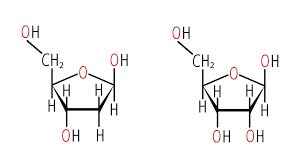
DNA contains deoxyribose sugar. RNA contains ribose sugar.
🟣 Example 1: The missing oxygen atom in deoxyribose makes DNA more stable.
🟣 Example 2: Ribose in RNA makes the molecule more flexible but less stable.
Nitrogen Bases
DNA uses adenine, thymine, cytosine, and guanine. RNA uses adenine, uracil, cytosine, and guanine.
🟣 Example 1: In DNA, adenine pairs with thymine.
🟣 Example 2: In RNA, adenine pairs with uracil instead of thymine.
Function
DNA stores genetic information. RNA helps convert that information into proteins.
🟣 Example 1: DNA holds instructions for building hemoglobin.
🟣 Example 2: RNA carries that instruction to ribosomes for protein production.
Location in Cell
DNA is mainly found in the nucleus. RNA can move between nucleus and cytoplasm.
🟣 Example 1: Human chromosomes stay inside the nucleus.
🟣 Example 2: mRNA travels to ribosomes in the cytoplasm.
Stability
DNA is very stable and lasts for long periods. RNA breaks down more quickly.
🟣 Example 1: Ancient DNA can survive thousands of years in fossils.
🟣 Example 2: RNA molecules in cells often last only minutes or hours.
Types
DNA has one main form. RNA has several types such as mRNA, tRNA, and rRNA.
🟣 Example 1: Messenger RNA carries genetic messages.
🟣 Example 2: Transfer RNA helps place amino acids during protein synthesis.
Length
DNA molecules are extremely long. RNA molecules are shorter.
🟣 Example 1: Human DNA contains billions of base pairs.
🟣 Example 2: A messenger RNA strand may carry only one gene message.
Role in Technology
DNA is widely used in genetic testing and forensic science. RNA is used in modern vaccines and gene therapy.
🟣 Example 1: DNA profiling helps solve crimes.
🟣 Example 2: mRNA vaccines teach the immune system to fight viruses.
Recent Scientific Discoveries
DNA research focuses on genome editing and gene storage. RNA research explores gene regulation and medical treatments.
🟣 Example 1: Scientists use CRISPR to edit DNA sequences.
🟣 Example 2: Small interfering RNA is studied to silence harmful genes.
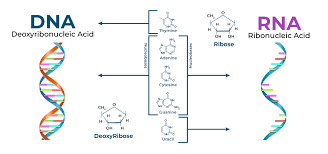
Detail about this image can be seen at….
Nature and Behaviour of DNA
DNA behaves like a stable archive of genetic instructions. It replicates before cell division and ensures that each new cell receives the same genetic information. Because of its double helix structure, DNA protects the genetic code from damage.
Read about more difference between….
Nature and Behaviour of RNA
RNA is more active and dynamic. It forms different shapes and participates in many cellular processes such as protein synthesis, gene regulation, and signaling. Some RNA molecules even act like enzymes, which scientists call ribozymes.
Why People Often Confuse DNA and RNA
Many people confuse them because both carry genetic information and have similar chemical structures. Their names also sound alike. In basic biology classes, students often learn about them together, which can blur their different roles. However, their functions and structures are clearly distinct.
Table Showing Difference and Similarity
| Feature | DNA | RNA | Similarity |
|---|---|---|---|
| Structure | Double strand | Single strand | Both are nucleic acids |
| Sugar | Deoxyribose | Ribose | Both contain sugar molecules |
| Bases | A, T, C, G | A, U, C, G | Both contain nitrogen bases |
| Function | Stores genetic code | Uses genetic code | Both carry genetic information |
| Stability | Very stable | Less stable | Both exist inside cells |
Which Is Better in What Situation?
DNA is better for long-term storage of genetic information. Its strong double helix structure protects genes from damage and keeps instructions safe for many generations. This stability allows organisms to inherit traits accurately from parents.
RNA is better for active cellular work. It moves easily inside cells and quickly carries messages for protein production. In biotechnology, RNA is also useful for rapid medical solutions such as mRNA vaccines and gene-regulation therapies.
How DNA and RNA Appear in Metaphors and Similes
DNA, usually described as the “blueprint of life” because it stores detailed instructions for building living organisms.
RNA is sometimes called the “messenger of life” because it carries genetic messages from DNA to ribosomes.
In popular science writing, DNA may be compared to a library, while RNA acts like a librarian delivering books to readers.
Connotative Meaning of DNA and RNA
🟣 DNA often carries a positive meaning related to identity, heritage, and uniqueness. Example: “Innovation is in the company’s DNA.”
🟣 RNA usually has a neutral scientific meaning connected with cellular activity and biotechnology. Example: “RNA technology is shaping modern medicine.”
Idioms or Proverbs Related to the Words
🟣 “It is in his DNA.”
Example: Leadership seems natural to her; it feels like it is in her DNA.
🟣 “Part of the company’s DNA.”
Example: Creativity is part of the company’s DNA and guides every project.
Works in Literature Related to the Topic
🟣 The Double Helix – nonfiction science book, written by James Watson, 1968.
🟣 The Gene: An Intimate History – science narrative, written by Siddhartha Mukherjee, 2016.
Movies Related to DNA or Genetics
🟣 Gattaca – 1997, United States. A science fiction film about genetic selection and identity.
🟣 Jurassic Park – 1993, United States. A famous movie showing dinosaurs recreated through DNA technology.
Frequently Asked Questions
1. What is the main difference between DNA and RNA?
DNA stores genetic information, while RNA helps use that information to make proteins.
2. Why does RNA contain uracil instead of thymine?
Uracil makes RNA synthesis easier and suits its short-term cellular role.
3. Can RNA act like an enzyme?
Yes. Some RNA molecules called ribozymes can catalyze chemical reactions.
4. Why is DNA more stable than RNA?
DNA lacks one oxygen atom in its sugar and has a double helix structure, which increases stability.
5. How RNA can be used in modern medicine?
RNA technology helps make vaccines, gene therapy, and disease treatment research.
How DNA and RNA Are Helpful
DNA and RNA research supports agriculture, medicine, and environmental protection. Scientists use genetic knowledge to develop disease-resistant crops and improve food security. RNA-based tools also help detect viruses and study ecosystems. These discoveries improve health, biodiversity, and sustainability around the world.
Final Words on DNA
DNA represents the long-term memory of life. It protects the genetic blueprint that defines every living organism.
Final Words on RNA
RNA represents the active voice of genes. It reads DNA instructions and turns them into biological action.
Conclusion
DNA and RNA are two fundamental molecules that shape all living systems. DNA stores genetic instructions in a stable double helix, while RNA acts as a messenger and worker that helps build proteins and regulate genes. Their differences in structure, function, and stability allow cells to manage complex biological processes efficiently. Modern science continues to reveal new roles for RNA in medicine, especially in vaccines and gene therapy. Understanding the difference between DNA and RNA not only strengthens knowledge in biology but also opens doors to innovations that improve health, agriculture, and technology for society. Learn more…..

Hi All! I’m Imran Abbas. I’m a Ph.D (scholar) in Structural Chemistry and I work in a number of domains like Bioinformatics, Literature, politics, sports and I’m a polyglot as well. I respect all irrespective of their ethnicity, locality and color. I’m always ready to learn new ideas and travel to different parts of the world.