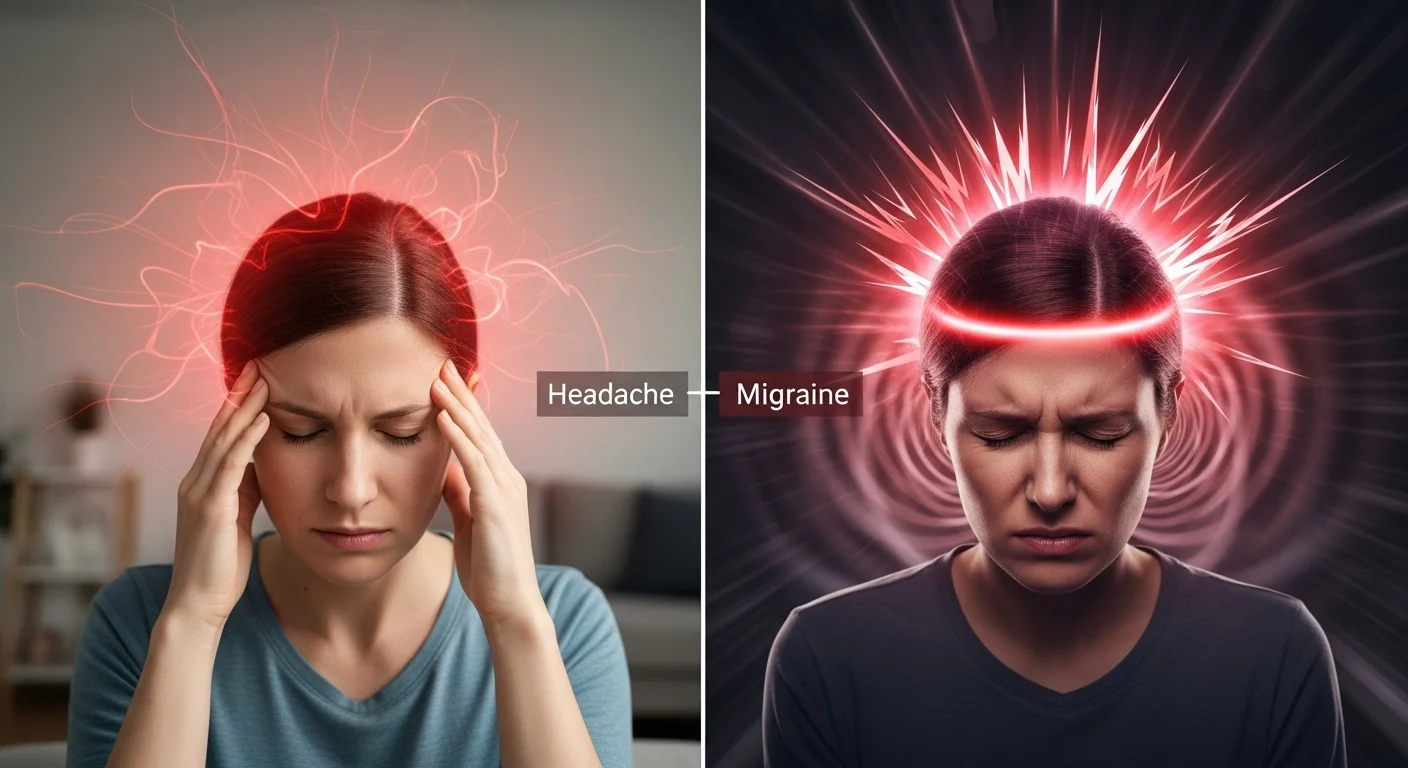
Understanding the difference between headache and migraine is crucial for anyone experiencing recurring head pain, as proper identification determines treatment effectiveness and quality of life. While nearly everyone experiences occasional headaches, migraines affect over 1 billion people globally and rank as the second leading cause of disability worldwide. The difference between headache and migraine extends far beyond pain intensity—it encompasses distinct neurological mechanisms, symptom profiles, triggers, and treatment protocols. In this comprehensive guide, we’ll explore everything you need to know about distinguishing these conditions, empowering you to seek appropriate care and reclaim control over your health.
The fundamental difference between headache and migraine lies in their underlying pathology. A headache is a symptom—pain occurring in any region of the head—while migraine is a complex neurological disorder involving brain chemistry, nerve pathways, and vascular changes. Think of it this way: all migraines involve headaches, but not all headaches are migraines.
Critical Distinctions at a Glance
| Characteristic | Tension Headache | Migraine |
|---|---|---|
| Pain Quality | Dull, pressure, band-like | Throbbing, pulsating, stabbing |
| Pain Location | Bilateral (both sides) | Often unilateral (one side) |
| Pain Intensity | Mild to moderate | Moderate to severe, disabling |
| Duration | 30 minutes to 7 days | 4-72 hours untreated |
| Associated Symptoms | Minimal | Nausea, vomiting, sensitivity to light/sound/smell |
| Aura | Never | Present in 25-30% of cases |
| Physical Activity Impact | Mild worsening | Significantly aggravates pain |
| Neurological Origin | Muscular/vascular tension | Brain disorder with genetic component |
Understanding Primary Headache Disorders
Primary headaches constitute independent conditions not caused by underlying medical issues. The International Classification of Headache Disorders (ICHD-3) recognizes over 200 distinct headache types, with these three representing 90% of cases:
Tension-Type Headache (TTH)
The Most Common Headache Disorder
Affecting 78% of adults annually, tension-type headaches present as bilateral pressure or tightness, often described as a “vice grip” or “band around the head.” Pain typically radiates from the neck and posterior head forward to the forehead.
Subtypes:
- Infrequent Episodic: Less than 12 days yearly, lasting 30 minutes to 7 days
- Frequent Episodic: 12-180 days yearly, significantly impacting quality of life
- Chronic: Over 180 days yearly, often requiring preventive intervention
Pathophysiology: While historically attributed solely to muscle tension, current research implicates central pain processing abnormalities and serotonin dysfunction alongside pericranial muscle tenderness.
Learn more about differences on other topics at….

Cluster Headache
The “Suicide Headache”
Though less common (0.1% prevalence), cluster headaches demand distinct recognition due to their excruciating intensity—often rated 10/10 pain severity. These strictly unilateral headaches center around the orbital (eye) or temporal regions.
Distinguishing Features:
- Excruciating piercing or burning quality
- Duration 15-180 minutes
- Ipsilateral autonomic symptoms: tearing, nasal congestion, eyelid drooping, pupil constriction
- Restlessness and agitation (patients often pace or rock)
- Circadian rhythmicity—attacks frequently occur at consistent times, often awakening patients from sleep
Gender Disparity: Men experience cluster headaches at 3:1 ratio versus women, unlike migraines where women predominate 3:1.
Other Primary Headaches
Hemicrania Continua: Continuous unilateral pain with exacerbations, absolutely responsive to indomethacin.
Paroxysmal Hemicrania: Frequent, severe unilateral attacks lasting 2-30 minutes, occurring 5-40 times daily.
Short-Lasting Unilateral Neuralgiform Headache Attacks (SUNCT/SUNA): Brief, stabbing pains with autonomic features.
Deep Dive: Migraine as Neurological Disorder
Migraine represents far more than “bad headaches”—it’s a genetic, episodic brain disorder characterized by altered sensory processing and neuronal excitability.
The Four Migraine Phases
Not all patients experience all phases, and phases may overlap:
1. Prodrome (Pre-Headache Phase)
Occurrence: 60% of migraineurs, 24-48 hours before pain
Symptoms: Subtle changes including mood alterations (depression or euphoria), food cravings, neck stiffness, increased urination, yawning, fatigue, photophobia
2. Aura Phase
Prevalence: 25-30% of migraine sufferers
Characteristics: Fully reversible neurological symptoms lasting 5-60 minutes
Visual Aura (90% of auras):
- Fortification spectra (zigzag lines)
- Scintillating scotomas (shimmering blind spots)
- Tunnel vision or hemianopia
- Alice in Wonderland syndrome (perceptual distortions)
Sensory Aura: Numbness/tingling (paresthesia) spreading gradually, often cheiro-oral (hand and mouth).
Speech Aura: Aphasia or word-finding difficulties.
Motor Aura: Weakness (hemiplegic migraine, rare subtype).
Critical Distinction: Aura symptoms develop gradually over ≥5 minutes, differentiating them from stroke’s sudden onset.
3. Headache Phase
Duration: 4-72 hours untreated or unsuccessfully treated
Characteristics: Unilateral or bilateral throbbing pain, moderate to severe intensity, aggravated by routine physical activity
Associated Symptoms: Nausea (90%), vomiting (50%), photophobia (80%), phonophobia (80%), osmophobia (40%), allodynia (pain from normally non-painful stimuli)
4. Postdrome (Recovery Phase)
Duration: 24-48 hours following pain resolution
Symptoms: Fatigue, cognitive sluggishness (“brain fog”), scalp tenderness, mood changes, residual sensitivity to sensory stimuli
Migraine Subtypes: Beyond “With” and “Without Aura”
Chronic Migraine: ≥15 headache days monthly, ≥8 migraine days, lasting >3 months. Affects 2% of population, representing transformation from episodic migraine.
Vestibular Migraine: Vertigo and dizziness as dominant features, with or without headache.
Abdominal Migraine: Predominantly pediatric, episodic midline abdominal pain with nausea/vomiting, no headache.
Hemiplegic Migraine: Motor weakness during aura, familial (FHM) or sporadic (SHM) forms with genetic mutations identified.
Retinal Migraine: Monocular visual disturbances—scintillations, scotomata, or blindness—differentiating from binocular aura of typical migraine.
Status Migrainosus: Debilitating migraine attack persisting >72 hours despite treatment.
The Neurobiology: Why Migraine Isn’t “Just a Headache”
Cortical Spreading Depression (CSD)
The neurophysiological hallmark of migraine with aura, CSD represents a wave of neuronal depolarization followed by suppression, propagating across the cortex at 3-5mm/minute. This explains:
- Aura symptom progression matching cortical mapping
- Blood flow changes (initial hyperemia followed by oligemia)
- Activation of meningeal nociceptors triggering headache phase
The Trigeminovascular System
Migraine pain originates from activation of trigeminal nerve fibers innervating meningeal blood vessels. Released neuropeptides (CGRP, substance P, neurokinin A) cause:
- Vasodilation
- Plasma protein extravasation (neurogenic inflammation)
- Sensitization of peripheral and central trigeminal neurons
This explains why triptans (serotonin 5-HT1B/1D agonists) effectively abort migraines by constricting vessels and inhibiting neuropeptide release.
Central Sensitization
Repeated migraine attacks lead to maladaptive neuroplastic changes:
- Peripheral Sensitization: Increased responsiveness of first-order trigeminal neurons
- Central Sensitization: Hyperexcitability of second-order brainstem neurons and third-order thalamocortical neurons
- Cutaneous Allodynia: Pain from touching hair, wearing glasses, or resting head on pillow—reported by 80% during attacks
This sensitization explains migraine comorbidities including fibromyalgia, irritable bowel syndrome, and chronic pain syndromes.
Diagnostic Criteria: Clinical Precision
ICHD-3 Diagnostic Criteria for Migraine Without Aura
A. At least five attacks fulfilling B-D
B. Headache attacks lasting 4-72 hours (untreated or unsuccessfully treated)
C. Headache has at least two of the following characteristics:
- Unilateral location
- Pulsating quality
- Moderate or severe pain intensity
- Aggravation by or causing avoidance of routine physical activity
D. During headache, at least one of:
- Nausea and/or vomiting
- Photophobia and phonophobia
E. Not better accounted for by another ICHD-3 diagnosis
Red Flags: When Headache Signals Emergency
The “SNOOP” mnemonic identifies headaches requiring immediate investigation:
Systemic symptoms (fever, weight loss) or secondary risk factors (HIV, cancer, pregnancy)
Neurological signs or symptoms (confusion, impaired alertness, focal deficits)
Onset sudden or abrupt (“thunderclap”) reaching maximum intensity in <1 minute
Older age (>50 years) with new-onset headache or change in pattern
Prior headache history with progressive worsening or change in characteristics
Additional Red Flags:
- Papilledema (swollen optic disc indicating elevated intracranial pressure)
- Headache waking patient from sleep or worst upon waking
- Positional worsening (suggesting intracranial pressure changes)
- Exertional or sexual headache onset
Treatment Paradigms: Evidence-Based Approaches
Acute Treatment: Aborting Attacks
Mild to Moderate Headaches/Migraines:
- NSAIDs: Ibuprofen 400-800mg, naproxen 500-825mg, aspirin 900-1000mg
- Acetaminophen: 1000mg (less effective for migraine specifically)
- Combination Analgesics: Excedrin (acetaminophen/aspirin/caffeine) shows superior efficacy to individual components
Moderate to Severe Migraines:
- Triptans: Sumatriptan (oral, nasal, subcutaneous), rizatriptan, zolmitriptan. First-line for moderate-severe attacks. Contraindicated in cardiovascular disease.
- Gepants: Ubrogepant, rimegepant. CGRP receptor antagonists without vasoconstriction—safe for cardiovascular patients.
- Ditans: Lasmiditan. 5-HT1F agonist without vasoconstriction, but driving restrictions due to CNS effects.
Anti-Emetics: Metoclopramide addresses both nausea and gastric stasis (which impairs oral medication absorption during attacks).
Rescue Medications: Opioids and barbiturates (butalbital) strongly discouraged due to medication-overuse headache risk and dependency.
Preventive Treatment: Reducing Attack Frequency
Indications for prevention:
- ≥4 migraine days monthly
- Significant disability despite acute treatment
- Contraindications to or failure of acute medications
- Adverse events from acute medications
First-Line Options:
- Beta-Blockers: Propranolol, metoprolol (reduce frequency by 50% in ~50% of patients)
- CGRP Monoclonal Antibodies: Erenumab, fremanezumab, galcanezumab, eptinezumab. Revolutionary targeted therapy with excellent efficacy and tolerability.
- Oral Preventives: Topiramate, amitriptyline, venlafaxine, valproate
OnabotulinumtoxinA (Botox): FDA-approved for chronic migraine (≥15 days monthly), 31 injections every 12 weeks.
Neuromodulation Devices: Non-invasive vagus nerve stimulators, external trigeminal nerve stimulators, and single-pulse transcranial magnetic stimulators offer drug-free alternatives.
Lifestyle and Trigger Management
Consistent Triggers (identifiable in ~10% of patients):
- Hormonal: Menstruation (estrogen withdrawal), ovulation, menopause, hormonal contraceptives
- Dietary: Alcohol (especially red wine), aged cheeses, processed meats (nitrates), MSG, artificial sweeteners, caffeine withdrawal
- Environmental: Weather changes, bright lights, strong odors, altitude changes
- Behavioral: Sleep deprivation or oversleeping, skipped meals, dehydration, stress let-down (post-stress relaxation)
- Physical: Intense exertion, poor posture, jaw clenching
Trigger Nuance: Recent research suggests many “triggers” may actually represent premonitory symptoms (prodrome) rather than true triggers—patients crave chocolate before attacks due to hypothalamic activation, then attribute the attack to chocolate consumption.
Special Populations: Unique Considerations
Pediatric Migraine
Prevalence: 10% of school-age children, 28% of adolescents
Atypical Presentations: Shorter duration (2-72 hours acceptable), bilateral location, gastrointestinal symptoms predominant
Impact: School absence, academic underperformance, social isolation
Treatment: Ibuprofen, triptans (sumatriptan nasal spray approved ≥12 years), lifestyle consistency paramount
Pregnancy and Lactation
Physiological Changes: 50-80% improvement in second/third trimesters due to stable estrogen levels; 50% worsen postpartum
Medication Safety:
- Acetaminophen: First-line for acute treatment
- NSAIDs: Avoid third trimester (premature ductus arteriosus closure)
- Triptans: Sumatriptan pregnancy registry data reassuring; generally considered safe
- Preventives: Propranolol, metoprolol, amitriptyline typically continued; valproate absolutely contraindicated (neural tube defects)
Menstrual Migraine
Pure Menstrual Migraine: Attacks exclusively days -2 to +3 of menstruation (≤60% of cycles)
Menstrually-Related Migraine: Additional attacks at other times
Specific Strategies:
- Short-term Prevention: Frova (frovatriptan) 2.5mg BID or Naratriptan 1mg BID from days -2 to +3
- Continuous Hormonal Contraception: Eliminating estrogen withdrawal (contraindicated with aura due to stroke risk)
Comorbidities: The Migraine Spectrum
Migraine associates with numerous conditions, sharing genetic or pathophysiological mechanisms:
Psychiatric: Major depression (bidirectional relationship), anxiety disorders, panic disorder, bipolar disorder
Cardiovascular: Ischemic stroke (particularly migraine with aura), myocardial infarction, patent foramen ovale, Raynaud’s phenomenon
Neurological: Epilepsy, restless legs syndrome, essential tremor
Other: Asthma, irritable bowel syndrome, fibromyalgia, chronic fatigue syndrome, benign paroxysmal vertigo
Understanding these associations guides comprehensive patient care and screening.
When to Seek Professional Evaluation
Immediate Emergency Care:
- First or worst headache of life
- Thunderclap onset
- Fever with neck stiffness
- New neurological deficits (weakness, vision loss, speech difficulty)
- Altered consciousness or confusion
- Head trauma
- New headache after age 50
Specialist Referral (Neurologist or Headache Specialist):
- Headaches increasing in frequency or severity
- ≥4 migraine days monthly
- Significant disability despite OTC treatment
- Requirement for acute medication >2 days weekly
- Presence of aura, particularly prolonged or atypical aura
Living Well: The Patient Journey
Migraine management extends beyond pharmacology:
Cognitive-Behavioral Therapy: Biofeedback and relaxation training demonstrate efficacy equivalent to some preventive medications.
Physical Interventions: Neck-specific exercises, posture correction, occipital nerve blocks for appropriate candidates.
Dietary Supplements: Magnesium (400-600mg daily), riboflavin (400mg daily), CoQ10 (100mg TID) show modest evidence for prevention.
Sleep Hygiene: Consistent sleep-wake schedule often more impactful than trigger avoidance.
Patient Education: Understanding migraine as brain disorder reduces stigma, improves treatment adherence, and empowers self-advocacy.
Conclusion: Knowledge as Treatment
The difference between headache and migraine represents the distinction between symptom and syndrome, between benign discomfort and disabling neurological disease. Accurate diagnosis—recognizing pulsating unilateral pain with sensory sensitivity and associated features versus bilateral pressure without systemic symptoms—directs appropriate treatment and prevents unnecessary suffering.
For the 12% of global population experiencing migraine, understanding their condition transforms management from reactive suffering to proactive control. For those with tension-type headaches, recognizing the benign nature prevents over-medicalization while identifying when patterns change requiring re-evaluation.
If you experience recurrent head pain, maintain a detailed headache diary—recording timing, duration, characteristics, associated symptoms, triggers, and treatment responses. This documentation proves invaluable for clinical consultations and often reveals patterns invisible to memory alone.
Remember: Effective treatment exists. No one should accept recurrent disabling pain as inevitable. The landscape of migraine medicine has transformed dramatically with CGRP-targeted therapies, offering genuine hope for those previously treatment-resistant.

Hi All! I’m Imran Abbas. I’m a Ph.D (scholar) in Structural Chemistry and I work in a number of domains like Bioinformatics, Literature, politics, sports and I’m a polyglot as well. I respect all irrespective of their ethnicity, locality and color. I’m always ready to learn new ideas and travel to different parts of the world.