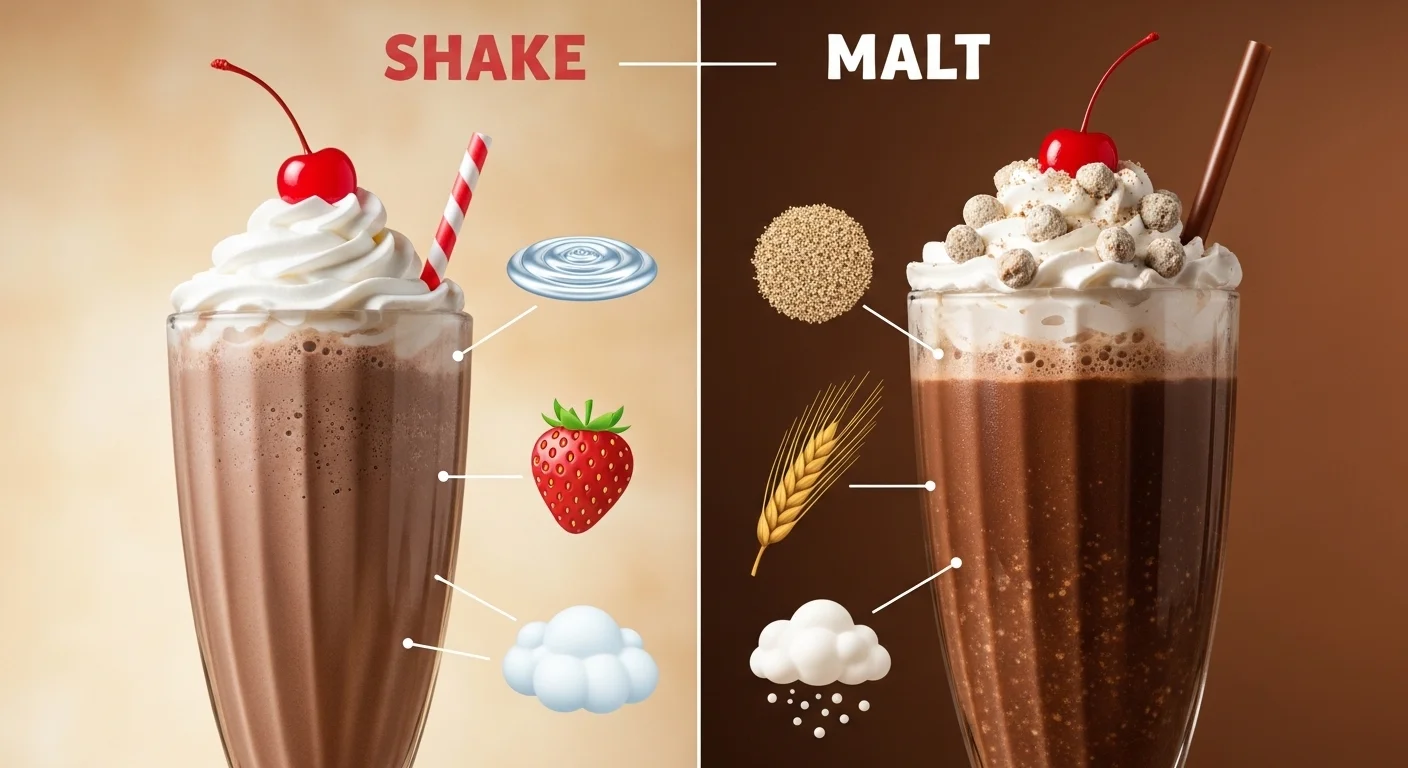
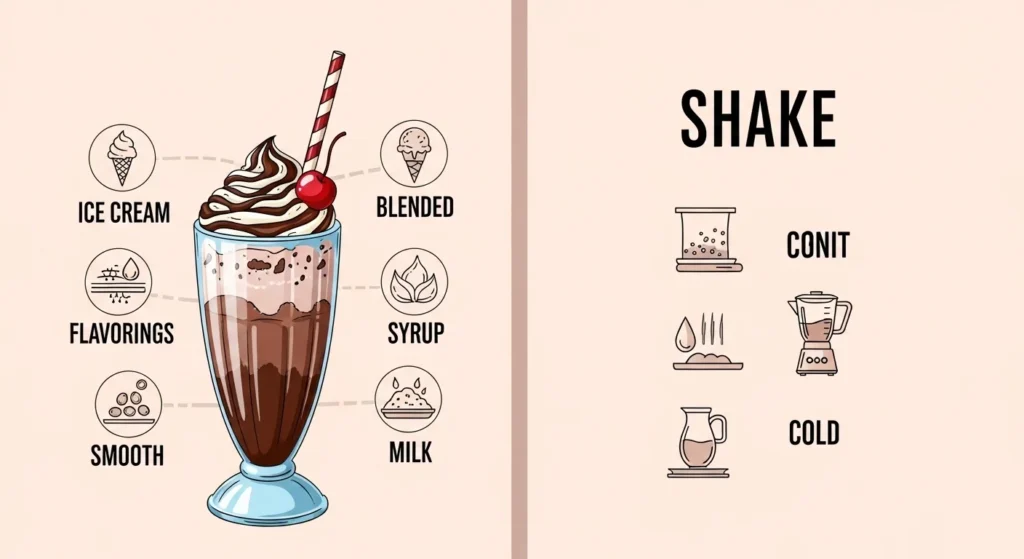
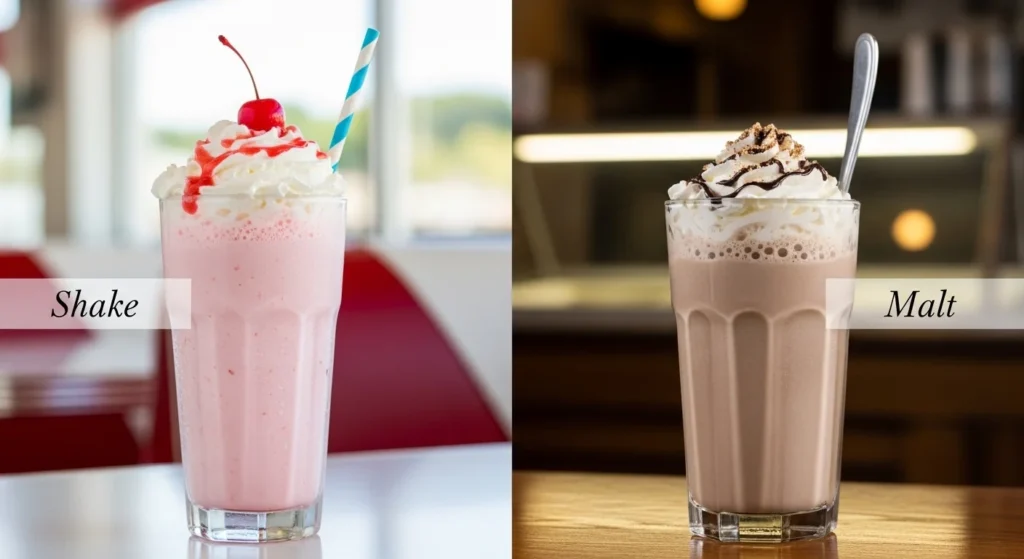
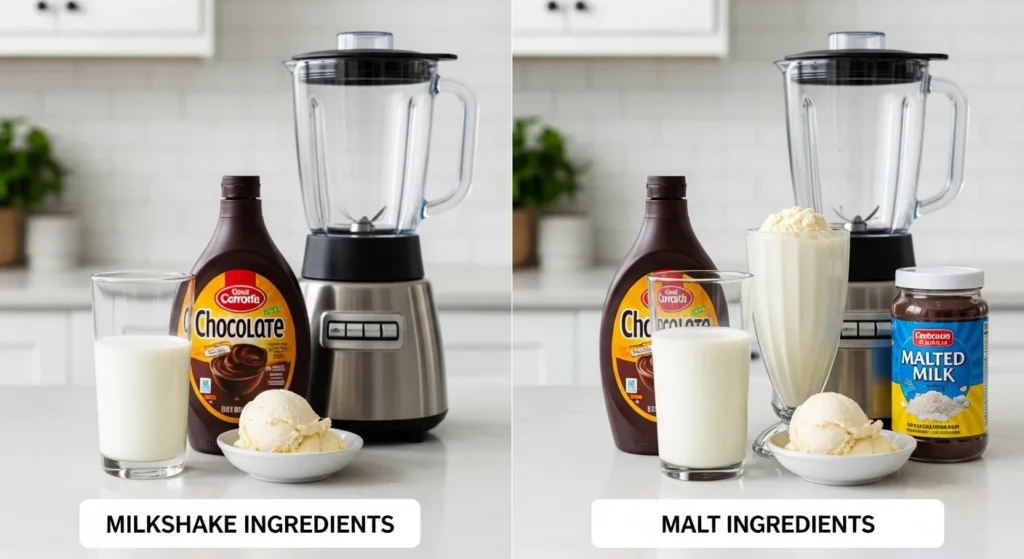
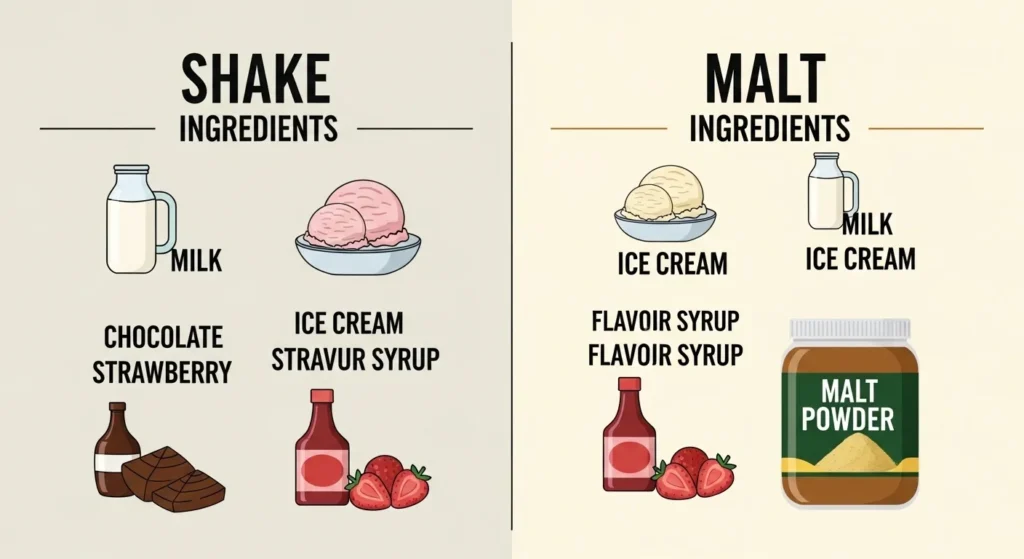
Difference between shake and malt is a common question among dessert lovers who often see both drinks listed on café and diner menus. At first glance they appear identical, yet the difference between shake and malt lies in a subtle ingredient that transforms the taste and texture. A milkshake is a creamy blend of milk, ice cream, and flavored syrups, while a malt adds malted milk powder to the mixture. This single addition creates the recognizable flavor that has made malts a nostalgic favorite for decades. Because of this ingredient, the difference between shake and malt becomes noticeable in both aroma and richness.
For anyone exploring classic American-style frozen beverages, understanding the difference between shake and malt helps in choosing the right treat. While a traditional milkshake delivers smooth sweetness and a familiar creamy taste, a malt provides a slightly toasted and nutty depth. In dessert culture and diner traditions, the difference between shake and malt represents the distinction between a simple ice-cream drink and a vintage malt-shop specialty. Once you recognize the difference between shake and malt, ordering your favorite frozen drink becomes a much more satisfying experience.
“I’ll have a chocolate malt.”
“We don’t do malts. Just shakes.”
The conversation ended awkwardly. You settled for a shake, but the question haunted you: What exactly had you been denied?
Part 1: The Definitive Distinction – One Powder, Two Worlds
The Simple Truth
| Shake (Milkshake) | Malt (Malted Milkshake) | |
|---|---|---|
| Base ingredients | Ice cream + milk + flavorings | Ice cream + milk + flavorings + malted milk powder |
| Key addition | None | Malted milk powder |
| Flavor profile | Sweet, creamy, straightforward | Sweet, creamy, toasty, nutty, slightly savory |
| Texture | Smooth, velvety | Slightly thicker, more substantial |
| Historical era | 1880s–present | 1880s–1960s peak, niche revival |
“The difference between a malt and a shake is that a malt is a milkshake made with malted milk powder.” — WebstaurantStore
The Core Insight: A malt is simply a milkshake plus malted milk powder. That’s it. No mysterious process. No ancient technique. Just one ingredient that transforms everything.Part 2: The Magic Powder – What Is Malted Milk?
The Victorian Health Food That Became a Soda Fountain Staple
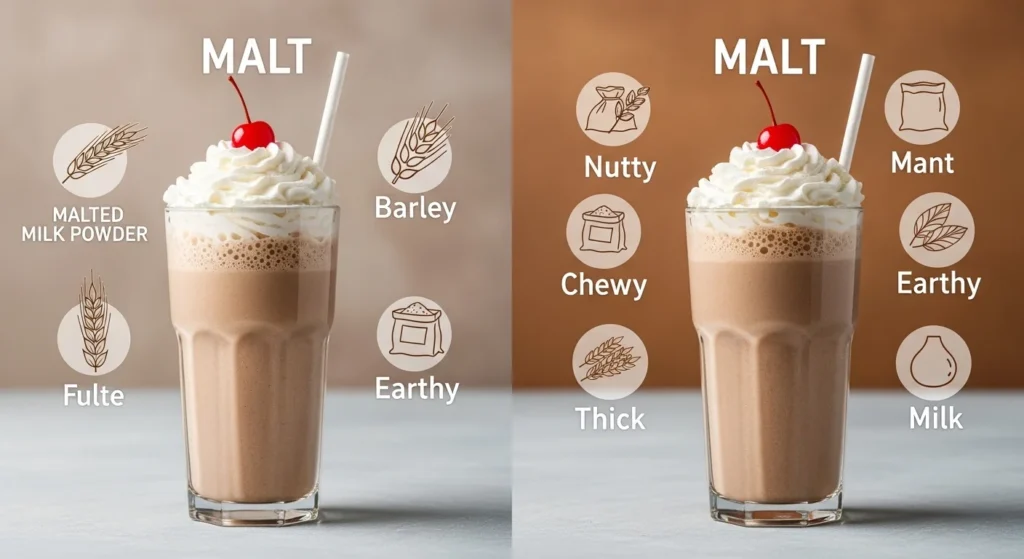
Malted milk powder is the hero of our story. Invented in 1873 by British pharmacist James Horlick and perfected with his brother William in Racine, Wisconsin, it was originally marketed as “Horlick’s Food”—a nutritional supplement for infants and invalids.
The Ingredients:
- Malted barley (partially sprouted, dried, ground)
- Wheat flour
- Evaporated whole milk
- Sometimes: salt, sugar, cocoa
The Process: Barley grains are soaked, allowed to sprout (malt), then dried and toasted. This germination activates enzymes that convert starches into sugars—maltose—creating that distinctive toasty, nutty, slightly sweet flavor.
“Malted milk powder imparts a toasty flavor, mellow nuttiness and milky sweetness to the shake.” — Food Network
The “Health Food” Origins: Before modern pasteurization, milk was dangerous—often carrying tuberculosis and “summer sickness.” Horlick’s powder offered shelf-stable, supposedly digestible nutrition that could be mixed with water instead of risky fresh milk.
It became essential for polar expeditions, military rations, and Depression-era school lunches—those iconic malted milk tablets carried in pockets and purses for emergencies.
Part 3: The Historical Divergence – How Shakes and Malts Parted Ways
The 1880s: The Alcoholic Beginning
The original “milkshake” (1885) was whiskey, milk, and egg—essentially eggnog. A “healthy” tonic served at pharmacies.
By the early 1900s, the whiskey vanished (Prohibition pressure), replaced by flavored syrups and malted milk. The electric blender (1922) transformed the texture from shaken to whipped.
Have more fun about the difference between…..
The 1922 Breakthrough: Walgreens and the Malted Milkshake
Ivar “Pop” Coulson, a Walgreens employee in Chicago, made history by adding two scoops of vanilla ice cream to the standard malted milk drink.
The result? The malted milkshake—thicker, richer, more indulgent than any soda fountain creation before it. It spread across America like wildfire.
“In 1922, a Walgreens employee made a pivotal breakthrough: serving it all as a frozen milkshake.” — Yahoo Lifestyle
The Prohibition Connection
During Prohibition (1920–1933), soda fountains became “sober alternatives to bars.” The malted milkshake offered complex, adult flavor without alcohol—the “malty” taste sophisticated enough for grown-ups seeking respectable vice.
Soda Fountain Magazine (1915): “The soda fountain of today is an ally of temperance… Ice cream soda is a greater medium for the cause of temperance than all the sermons ever preached on that subject.”
The 1950s–1960s: The Golden Age
Malts were ubiquitous—at diners, drive-ins, soda fountains, and train dining cars. (Remember Judy ordering a “malted” in White Christmas? That’s 1954 authenticity.)
Carnation (1927) and Ovaltine (1904, Switzerland) competed with Horlick’s for the malt powder market. Chocolate malts became standard. Vanilla malts were “pure.”
Part 4: The Great Decline – Why Malts Disappeared
The 1970s: Fast Food Kills the Soda Fountain
| Factor | Impact on Malts |
|---|---|
| Drive-thru culture | No time for specialized preparation |
| Soft drink canning/bottling (late 1950s onward) | Soda fountains became obsolete |
| McDonald’s, Burger King, Wendy’s expansion | Standardized “shakes” without malt |
| Cost efficiency | Proprietary dairy mixes cheaper than malt powder |
| Changing tastes | Cleaner, simpler sweetness preferred |
“McDonald’s hasn’t sold a true milkshake in decades… such businesses created proprietary dairy mixes that excluded malt altogether.” — Yahoo Lifestyle
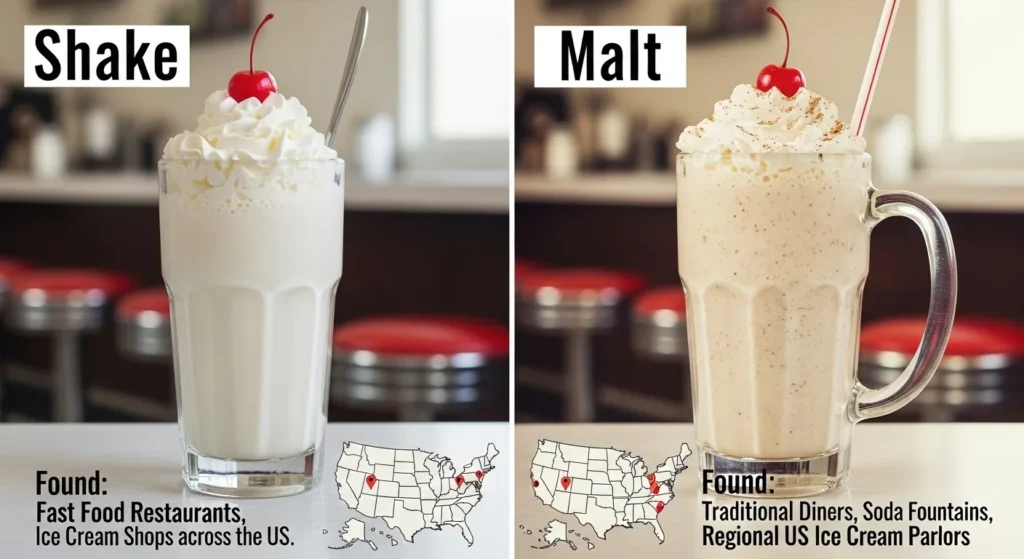
The Result: By the 1980s, malts were niche—found only at retro diners, old-school ice cream parlors, and regional chains like Dairy Queen (which still offers them).
The Modern Paradox: In 2025, you can find malted milk balls (Whoppers, Maltesers) in every convenience store, but malted milkshakes remain rare treasures.
Part 5: The Sensory Science – What Malt Actually Tastes Like
The Flavor Chemistry
| Component | Taste Contribution |
|---|---|
| Malted barley | Toasted, nutty, slightly bitter, cereal-like |
| Wheat flour | Body, thickness, mild sweetness |
| Evaporated milk | Creaminess, dairy richness |
| Maillard reaction products | Toffee, caramel, bread crust notes |
The Malt Experience:
- First sip: Sweet, creamy, familiar milkshake base
- Mid-palate: Toasty, nutty complexity emerges—like toasted bread crust or beer malt
- Finish: Slightly savory, almost salty—the “malty” signature that lingers
“Malts bring slightly nutty and toasted notes… This adds another flavor dimension.” — Black Burger
The Texture Difference: Malted milk powder absorbs liquid and adds body. A proper malt is thicker, more substantial than a standard shake—”hefty,” “satisfying,” “meal-like.”
Part 6: The Modern Revival – Where to Find Malts Today
The Niche Survivors
| Venue | Malt Availability | Style |
|---|---|---|
| Dairy Queen | Yes, traditional | Classic chocolate/vanilla |
| Retro diners (Johnny Rockets, local) | Often | Thick, hand-dipped |
| Soda fountains (surviving) | Specialty item | Historical authenticity |
| Craft ice cream shops | Revival trend | Artisanal, gourmet flavors |
| Home preparation | Carnation, Ovaltine powders | Nostalgia-driven |
The DIY Recipe (Per Serving):
- 2 scoops vanilla ice cream
- ½–¾ cup whole milk
- 2–3 tablespoons malted milk powder (Carnation, Horlick’s, or homebrew light malt extract)
- Flavorings: chocolate syrup, vanilla extract, optional malted milk candies
Pro Tips:
- Chill the blender first
- Don’t over-blend—adds air, thins texture
- Whole milk essential—skim milk makes sad malts
- Adjust malt powder to taste—3 tablespoons = strong malt flavor
Part 7: The Cultural Significance – Why the Distinction Matters
Malts as American Time Travel
Ordering a malt in 2025 is archaeological—you’re excavating a mid-century American moment when:
- Soda jerks were skilled professions
- Pharmacies were social hubs
- Temperance shaped dessert culture
- Malted milk was considered nutritious
The Shake: Modern, efficient, ubiquitous, forgettable.
The Malt: Historical, complex, rare, memorable.
“A malt is usually thicker, and a bit toastier than a shake.” — Reddit
The Burger Pairing Philosophy
| Pairing | Recommendation | Rationale |
|---|---|---|
| Classic cheeseburger | Malt | Toasty notes complement grilled beef |
| Spicy/bold toppings | Shake | Clean sweetness clears palate |
| Double bacon burger | Malt | Heft matches heft |
| Vegetarian/impossible | Shake | Lighter profile |
Part 8: The FAQ – Mastering Malt Literacy
Q: Is a malt healthier than a shake?
A: Originally, yes—by Victorian standards. Malted milk powder added protein and vitamins. Modern nutritional analysis: similar calories, malt has slightly more B vitamins from barley. Both are treats, not health food.
Q: Can I make a malt with Ovaltine?
A: Yes, but… Original Ovaltine contains malt, but also chocolate and sugar. For pure malt flavor, use Carnation Malted Milk or Horlick’s (still available in specialty stores and online).
Q: Why do malts taste slightly “savory”?
A: The Maillard reaction during barley toasting creates complex flavor compounds—some read as nutty, others as almost umami. It’s the same chemistry that makes toasted bread and roasted coffee compelling.
Q: Are malts making a comeback?
A: Niche revival. Craft cocktail bars use malt powder in malted old fashioneds. Artisanal ice cream shops offer house-made malts. But mainstream fast food has abandoned the format.
Q: What’s the difference between “malt” and “malted milk”?
A: “Malt” alone refers to sprouted grain (barley, primarily). “Malted milk” is the powdered combination of malted barley, wheat, and dried milk—the soda fountain ingredient.
Conclusion: The Toast of Two Centuries
The difference between shake and malt is one ingredient, but that ingredient carries 150 years of American history—from Victorian health anxiety to Prohibition ingenuity to mid-century prosperity to fast-food efficiency.
To order a malt today is to refuse standardization, to demand complexity, to remember when dessert was an event rather than a transaction.
The shake is now. The malt is then—and still, somehow, now.
Final Quote: “You could start with a Strawberry Milkshake to see what you think. But if you’ve never tasted a malt before, give it a try—you’ll be amazed at how much flavor it has compared to a regular shake.” — Pook’s Pantry
The difference between shake and malt mainly comes down to the addition of malted milk powder. A milkshake is simple, creamy, and widely loved, while a malt introduces a deeper flavor with a nostalgic twist. Both drinks remain timeless favorites in cafés and ice-cream shops.
By understanding the difference between shake and malt, you can easily decide which beverage suits your taste preferences. Whether you enjoy the classic smoothness of a shake or the rich flavor of a malt, both continue to delight dessert lovers around the world. Learn more at….

Hi All! I’m Imran Abbas. I’m a Ph.D (scholar) in Structural Chemistry and I work in a number of domains like Bioinformatics, Literature, politics, sports and I’m a polyglot as well. I respect all irrespective of their ethnicity, locality and color. I’m always ready to learn new ideas and travel to different parts of the world.